TL;DR:
- Proper technique and voltage settings are essential to prevent burnt hits and extend cartridge life.
- Testing for third-party lab reports ensures hemp cartridges are safe and free from harmful chemicals.
- Slow, controlled puffs and upright storage improve vaping experience and reduce issues like leaks and clogs.
Most people burn out their first few cartridges without ever knowing why. They crank the voltage up high, take long back-to-back draws, and wonder why their oil tastes like scorched rubber by day three. It’s not bad luck. It’s a simple mismatch between how the hardware actually works and how most users assume it works. Whether you’re new to hemp-derived vape products or you’ve been vaping for years, understanding the mechanics behind your cartridge changes everything, from the flavor you get on the first hit to how long your gear actually lasts.
Table of Contents
- What is a vape cartridge and how does it work?
- Key factors for safe and enjoyable vape cartridge use
- Understanding hemp-derived vape cartridges: Safety and quality insights
- Common problems and troubleshooting solutions
- Our perspective: What most users get wrong about vape cartridges
- Find quality vape cartridges and supplies
- Frequently asked questions
Key Takeaways
| Point | Details |
|---|---|
| Understand cartridge basics | Knowing the components and correct battery pairing prevents common user errors. |
| Use safe handling habits | Gentle, slow draws and correct voltage are key for flavor, safety, and cartridge life. |
| Prioritize product quality | Always choose lab-verified hemp cartridges to avoid contaminants and ensure wellness. |
| Troubleshoot issues quickly | Simple fixes address most leaks, clogs, and burnt hits—no need for drastic measures. |
What is a vape cartridge and how does it work?
A vape cartridge is a small, pre-filled container that holds concentrated oil and connects to a battery to produce vapor. It sounds simple, but there are several moving parts worth knowing. The main components are the mouthpiece (where you inhale), the chamber (which holds the oil), the coil (a heating element that vaporizes the oil), and the connector at the base, which is almost always a 510-thread design. That 510-thread standard is the reason most cartridges work across dozens of different batteries without any adapters.
The coil is the heart of the whole system. When you activate the battery, electricity flows through the coil, heats it up, and vaporizes the oil sitting directly around it. If the coil gets too hot or runs dry, it burns. If it doesn’t get hot enough, the oil stays thick and you get weak, unsatisfying pulls. This is why voltage matters so much.
| Component | Function |
|---|---|
| Mouthpiece | Delivers vapor to the user |
| Chamber | Holds the oil or concentrate |
| Coil/Atomizer | Heats oil to produce vapor |
| 510-thread connector | Attaches cartridge to battery |
| Airflow holes | Control draw resistance |
Oil viscosity (how thick or thin the oil is) plays a big role in how your cartridge performs. Thicker oils, like live resin or high-potency hemp extracts, don’t flow as easily to the coil. That’s where the preheat function on many modern batteries comes in. A short preheat cycle warms the oil gently, making it flow toward the coil before you take a draw. Skip this step with thick oil and you risk dry hits, which taste terrible and damage the coil faster.
According to standard usage guidance, 510-thread batteries at 3.3 to 3.8 volts give you the best balance of flavor and vapor production. Slow draws lasting 2 to 4 seconds, followed by pauses of 15 to 60 seconds between puffs, protect the coil and keep the experience consistent.
Basic requirements for using a vape cartridge correctly:
- Use a 510-thread battery with adjustable voltage settings
- Keep voltage between 3.3 and 3.8 volts for most oils
- Take slow, steady draws lasting no more than 2 to 4 seconds
- Wait 15 to 60 seconds between puffs to let the coil cool
- Store cartridges upright to prevent oil from pooling in the airflow holes
- Use the preheat function for thick or viscous oils like live resin
Key factors for safe and enjoyable vape cartridge use
Knowing the components is one thing. Using them well is another. Most of the common complaints people have about vape cartridges, burnt hits, weak flavor, inconsistent draws, come directly from skipping a few basic steps. The good news is that fixing them is straightforward once you understand the cause.
Operational best practices for better, safer vaping:
- Set your battery to the lowest voltage first (around 3.3V) and work up gradually until you find the sweet spot for your specific oil.
- Take slow, controlled draws. Pulling too fast forces air through before the coil can properly heat the oil, resulting in thin, unsatisfying vapor.
- Wait between hits. Fifteen to sixty seconds is the standard recommendation, but with thicker oils, lean toward the longer end.
- Store your cartridge upright, especially between sessions. Horizontal storage lets oil seep into the airflow holes and causes clogs.
- Keep cartridges away from direct sunlight and extreme heat, both of which degrade the oil and can cause leaking.
- Never overtighten the cartridge onto the battery. Finger-tight is all you need. Over-tightening can damage the connection pin and cause leaks.
Pro Tip: If you’re using a hemp-derived live resin cartridge, always run a preheat cycle before your first draw of the day. Live resin is significantly thicker than standard distillate, and a 5 to 10 second preheat at low voltage makes a noticeable difference in both flavor and vapor quality.
Chain vaping is one of the fastest ways to destroy a coil. When you take hit after hit without pausing, the coil doesn’t have time to cool down and re-saturate with oil. The result is a dry burn that leaves a harsh, acrid taste and permanently damages the heating element. Coil damage from chain vaping is almost always avoidable with simple patience between draws.
Understanding burnt hits specifically is worth a closer look. They happen for three main reasons: chain vaping (coil overheating), low oil level (coil running dry), or voltage set too high (oil vaporizing faster than it can replenish). The fix is almost always the same: lower voltage, pause longer, and check your oil level before assuming the cartridge is broken.
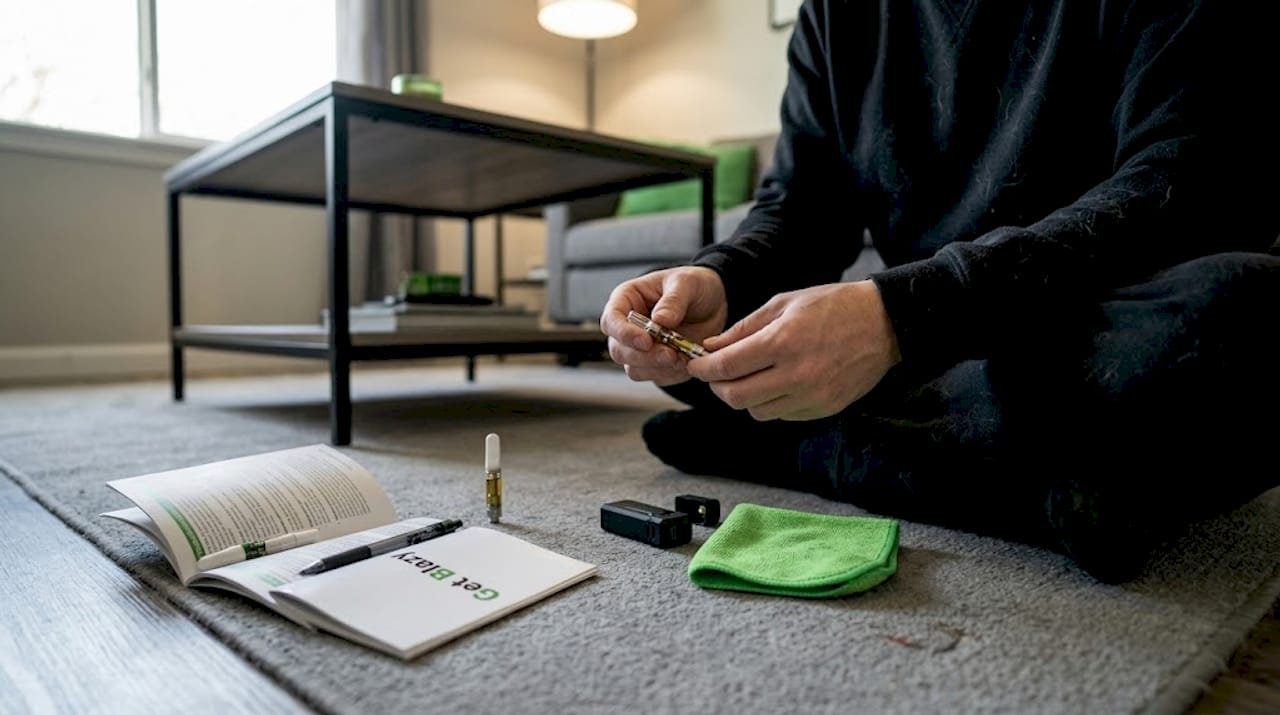
Leaking is a separate issue. It’s usually caused by heat exposure, changes in altitude (like flying with a cartridge), or overtightening the connection. Storing cartridges upright and keeping them away from heat solves most leaking problems before they start. Clogs, on the other hand, are almost always a thick-oil problem. Warming the cartridge gently in your hands for 30 seconds or running a preheat cycle usually clears the blockage without any tools.
Understanding hemp-derived vape cartridges: Safety and quality insights
Hemp-derived vape cartridges, including those containing Delta-8 and Delta-9 THC, occupy a unique space in the wellness market. They’re widely available, often more accessible than traditional cannabis products, and increasingly popular among people looking for relaxation and stress relief. But the quality gap between well-made and poorly-made hemp cartridges is enormous, and that gap has real safety implications.
The most important thing you can do before buying any hemp-derived cartridge is check for a Certificate of Analysis (COA). A COA is a third-party lab report that confirms what’s actually in the product. It should show cannabinoid potency, confirm the absence of residual solvents (chemicals left over from the extraction process), and verify that the product is free of heavy metals like lead and arsenic. If a brand doesn’t publish COAs, that’s a significant red flag.
| Feature | Lab-tested, regulated cartridge | Unregulated cartridge |
|---|---|---|
| Cannabinoid potency | Verified by third-party lab | Unknown or unverified |
| Residual solvents | Tested and confirmed absent | Potentially present |
| Heavy metals | Screened and within safe limits | No screening |
| Pesticides | Tested | Not tested |
| Additives/cutting agents | Disclosed | Unknown |
| Consumer risk | Low, when COA is verified | High |
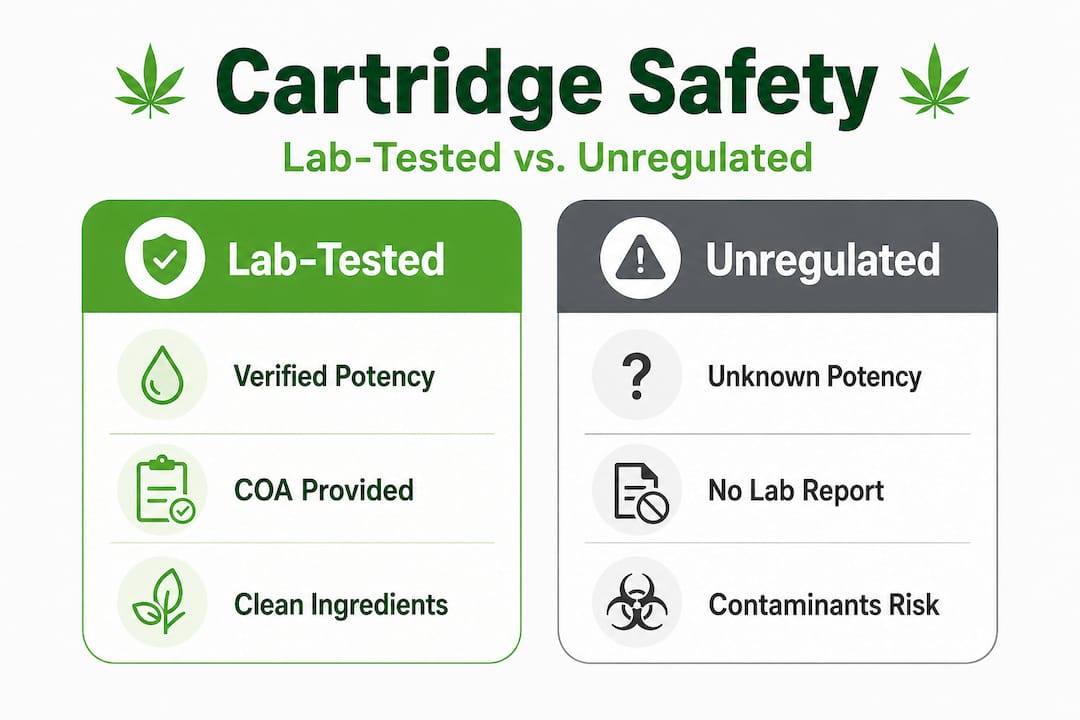
The stakes here are not trivial. Research on unregulated Delta-8/9 cartridges has identified as many as 26 toxic compounds in products that had no third-party testing or quality oversight. Those compounds include residual solvents and byproducts of uncontrolled chemical synthesis, none of which belong in a product people are inhaling directly into their lungs.
For wellness-focused vapers, this is where brand reputation and transparency become non-negotiable. A reputable retailer will not only carry lab-tested products but will also make those lab reports easy to find. You should be able to pull up the COA for any cartridge before you buy it, not after. If you have to dig through multiple pages or contact customer support just to find a lab report, that’s a sign the brand isn’t prioritizing your safety.
Delta-8 and Delta-9 hemp cartridges can absolutely be safe and enjoyable when they’re properly produced and verified. The key is knowing what to look for and refusing to compromise on transparency. Think of the COA as the ingredient label for your vape oil. You wouldn’t eat something with no ingredient list, and the same logic applies here.
Common problems and troubleshooting solutions
Even with the best cartridge and the right technique, issues come up. Here’s a practical breakdown of the most common problems and exactly how to fix them.
Quick-fix guide for common cartridge problems:
- Burnt hit: Lower your voltage immediately. If the problem persists, check your oil level. A cartridge that’s running low will produce dry hits even at correct voltage settings. Let the cartridge sit upright for a few minutes before trying again.
- Weak or thin vapor: Your voltage may be too low, or the oil is too thick to flow properly. Try a preheat cycle first. If that doesn’t help, bump voltage up slightly (no more than 0.2V at a time) and reassess.
- Clogged mouthpiece: Thick oil is almost always the culprit. Warm the cartridge gently between your palms for 30 seconds, or use the preheat function. Avoid using heat sources like hair dryers, which can overheat the oil and damage the cartridge.
- Leaking oil: Check that the cartridge is stored upright and that the connection isn’t overtightened. If you’ve been in a warm environment or at high altitude, those factors can cause pressure changes that push oil out. Wipe the connection pin clean and let the cartridge rest upright before using it again.
- No vapor at all: Check the battery charge first. Then inspect the connection between the cartridge and battery for debris. A small piece of lint or dried oil on the 510-thread connection can break the circuit entirely.
Pro Tip: Always store cartridges upright and finger-tight on the battery. This single habit prevents the majority of leaking and clogging issues most users experience, and it costs you nothing to implement.
Knowing when to fix versus when to replace is important too. If a cartridge produces burnt hits even after lowering voltage and waiting between draws, and the oil level is still adequate, the coil is likely damaged beyond recovery. At that point, replacing the cartridge is the right call. Continuing to use a burnt coil doesn’t just taste bad. It can introduce degraded compounds into the vapor that you don’t want to inhale.
Leaking and clogging from environmental factors like heat and altitude are almost always fixable with storage adjustments. But leaking caused by a cracked chamber or a faulty seal is a product defect, and no amount of troubleshooting will resolve it. In those cases, reach out to the retailer and ask about their return or replacement policy.
Our perspective: What most users get wrong about vape cartridges
Here’s the honest truth we’ve seen play out with countless customers: the biggest mistake isn’t a technical one. It’s the mindset of chasing intensity over consistency.
A lot of vapers assume that bigger clouds mean better results. So they push the voltage higher, take longer draws, and vape more frequently. What actually happens is the opposite of what they want. Higher voltage burns off terpenes (the compounds responsible for flavor and aroma) before they can be properly inhaled. Longer draws overheat the coil. More frequent hits mean no recovery time for the oil to re-saturate the wick. The result is a harsher, less flavorful experience that also burns through cartridges twice as fast.
True enjoyment from a vape cartridge comes from consistency and care, not from intensity. The best sessions are the ones where every hit tastes as good as the first.
For wellness-focused users specifically, this matters even more. If you’re using hemp-derived products for relaxation or stress relief, a harsh, burnt hit is counterproductive in every way. The whole point is a smooth, controlled experience. Slowing down, using lower voltage, and choosing verified products from transparent brands isn’t just better for your gear. It’s better for the entire reason you’re vaping in the first place.
We also see people underestimate how much product quality affects the experience. Two cartridges with identical oil content can produce completely different results depending on the coil quality, the seal integrity, and how the oil was extracted. Spending a little more on a lab-tested cartridge from a reputable source almost always delivers a better experience than going with the cheapest option available.
Find quality vape cartridges and supplies
You now know how vape cartridges work, what makes them perform well, and how to spot the difference between a trustworthy hemp-derived product and one that cuts corners. The next step is putting that knowledge to work with products you can actually trust.

At Get Blazy, we carry a carefully selected range of hemp-derived vape cartridges and accessories, all sourced from manufacturers who provide third-party lab testing and transparent COAs. Whether you’re shopping in our Miami store on Biscayne Blvd or ordering online for fast delivery across Miami, you’ll find products that meet real quality standards. We’re not just selling vape gear. We’re helping you make informed choices that support your wellness goals. Browse our selection and see what a difference verified quality makes.
Frequently asked questions
What voltage should I use for vape cartridges?
A range of 3.3 to 3.8 volts is ideal for flavor and safety with standard 510-thread batteries. Starting at the lower end and adjusting gradually helps you find the best setting for your specific oil.
Why does my vape cartridge clog or leak?
Clogs from thick oil are usually fixed by gently warming the cartridge, while leaks are typically caused by heat exposure, altitude changes, or overtightening the connection onto the battery.
How can I tell if a hemp-derived vape cartridge is safe?
Check for a third-party lab report (COA) that confirms the product is free of solvents and heavy metals. Research shows that unregulated cartridges can contain up to 26 toxic compounds, making COA verification essential.
How do I prevent burnt hits with vape cartridges?
Lower the battery voltage, avoid chain vaping, and allow 15 to 60 seconds between puffs so the coil can cool and the oil can re-saturate the wick before your next draw.