TL;DR:
- Trustworthy CBD products should have clear labels, third-party COAs, and matching batch numbers.
- Start with low doses, increase gradually, and track physical and mental responses over time.
- Consult healthcare providers before combining CBD with medications, especially for liver and drug interaction risks.
Starting a CBD routine in Miami should feel empowering, not exhausting. Yet between the tinctures, gummies, vape cartridges, and topicals lining store shelves on Biscayne Blvd, even a wellness-savvy shopper can spiral into confusion fast. There are no universal rules, no single correct dose, and no guaranteed outcomes stamped on any label. What Miami residents actually need is a clear, step-by-step checklist to cut through the noise, protect their health, and get real results from CBD. This guide covers exactly that: product verification, smart dosing, honest tracking, and safety checks that matter.
Table of Contents
- Check the CBD product label and third-party testing
- Start with a low CBD dose and adjust gradually
- Monitor wellness effects and set realistic expectations
- Check for medication interactions and liver risk
- Our perspective: The uncomfortable truths about CBD checklists
- Next steps: Connect with trusted CBD sources in Miami
- Frequently asked questions
Key Takeaways
| Point | Details |
|---|---|
| Read the label closely | Legit products list total CBD, dosage per serving, and have an up-to-date third-party COA. |
| Start slow, track carefully | Begin with a low dose, increase only if needed, and record your daily results for best safety and effectiveness. |
| Expect gradual, not guaranteed, results | CBD may help with stress or relaxation, but outcomes vary and can be similar to placebo for some people. |
| Watch for interactions | Always check with your doctor or pharmacist if you take other medications or plan to raise your dose. |
Check the CBD product label and third-party testing
With the confusion around CBD, your first priority is picking products you can actually trust. Not every bottle on a Miami store shelf is created equal. Some products are under-dosed, some contain unexpected ingredients, and a surprising number lack real transparency about what is inside. Before you open a cap or take a single drop, the label in your hand tells you everything you need to know about whether a product deserves your trust.
A credible CBD label should clearly state the total milligrams of CBD in the bottle and the milligrams per serving. These are two different numbers, and both matter. If a label only says “hemp extract” without specifying CBD content, that is a red flag. You should also see a batch or lot number printed somewhere on the packaging. That number links the product to a specific production run and makes independent verification possible.
Here is what a trustworthy label includes at minimum:
- Milligrams of CBD per serving (not just “hemp extract” or “full spectrum oil”)
- Batch or lot number for traceability
- Full ingredient list with no mystery compounds
- Manufacturer name and contact information
- QR code or URL linking to a Certificate of Analysis (COA)
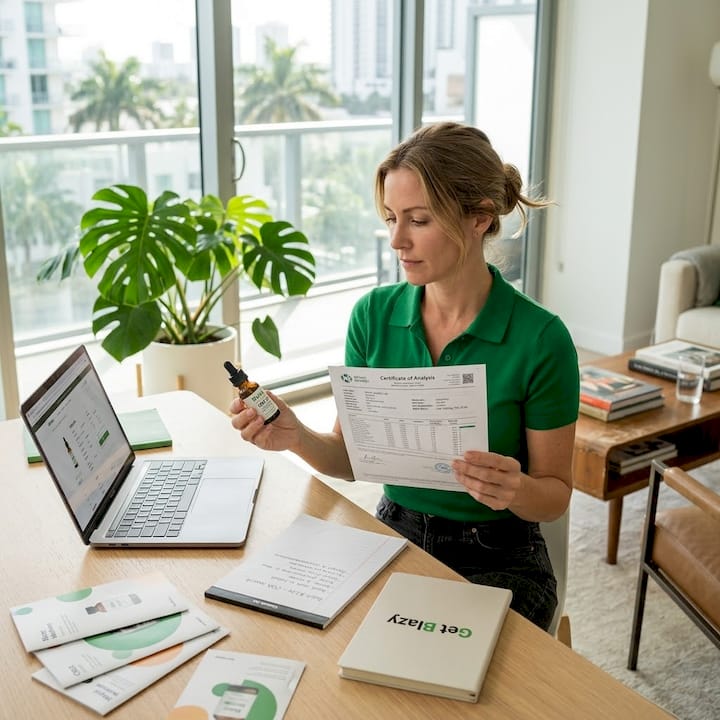
That Certificate of Analysis is your most powerful tool. A COA is a lab report produced by an independent, third-party testing facility that confirms what the product actually contains. It should show the potency (how much CBD is really in there), the THC percentage (which must be below 0.3% for legal hemp products in Florida), and test results for contaminants like heavy metals, pesticides, and microbials.
The critical step: do not just look for the COA logo. Open it. Scan the QR code or type in the URL, then confirm the testing lab is independent, not in-house. Any brand testing its own products without an accredited third party involved should raise serious doubts. Also check that the COA matches the lot number on your product. If those numbers do not line up, the COA is irrelevant to what you are holding.
As label and testing verification in a CBD checklist becomes more standard among reputable Miami dispensaries, consumers have more resources than ever to make informed calls. Still, there are no universally accepted, label-independent CBD dosage guidelines for non-prescription products, which makes verifying each product’s actual dosage and testing results non-negotiable before your first use.
Common red flags to watch for:
- Missing lot or batch number
- COA showing only CBD and nothing else tested
- Labels that list “estimated” milligrams instead of exact amounts
- No contact information or manufacturer address
- COA dated more than 12 months ago
Pro Tip: Florida’s Department of Agriculture and Consumer Services regulates hemp products sold in-state. If you want to cross-reference a brand’s registration or file a complaint about a mislabeled product, that is a real option Miami residents have access to. Use it.
Start with a low CBD dose and adjust gradually
Once you have picked a safe, tested product, your next key step is smart dosing. This is where many new users go wrong, assuming that taking more from the start will speed up results. It rarely does. What it actually does is make it harder to figure out what is working.
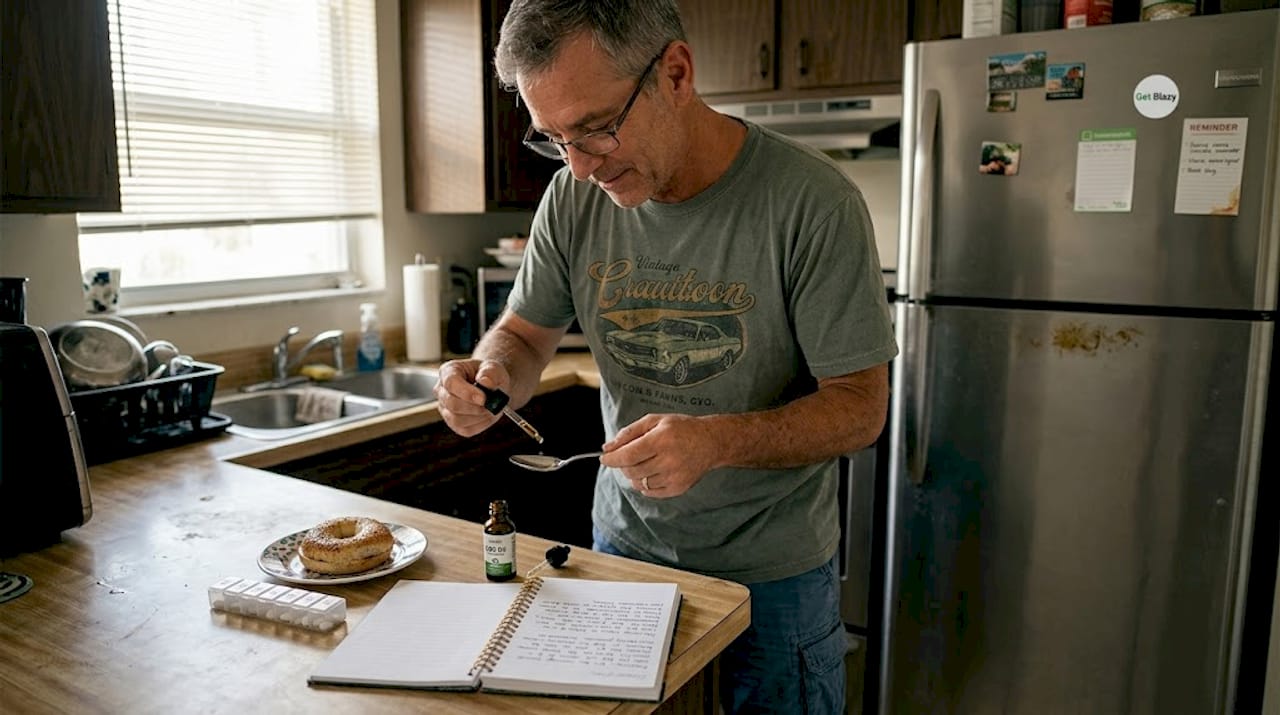
A start low, go slow approach is recommended since there are no official dosing guidelines for non-prescription CBD. For most adults new to CBD, that means beginning with 5 mg once daily, staying consistent for two to three days, then deciding whether to increase based on how your body responds.
Here is a practical step-by-step approach for your first two weeks:
- Days 1 to 3: Take 5 mg at the same time each day. Note any changes in mood, sleep, or physical comfort.
- Days 4 to 6: If you feel nothing and experience no side effects, increase by 2 to 5 mg. Do not jump from 5 mg to 25 mg.
- Days 7 to 9: Hold at your new dose and observe. Side effects like fatigue or appetite changes can appear as you increase.
- Days 10 to 14: If effects are positive and consistent, maintain that dose. If underwhelming, increase again by the same small margin.
- Week 3 onward: Re-evaluate every week. Optimal doses vary widely by individual, body weight, and product type.
Keeping a simple daily journal is one of the most underrated tools for CBD users. Write down your dose, the time you took it, and then three quick notes: your stress level, sleep quality the night before, and any physical sensations. Over two weeks, patterns appear. Without tracking, most people either overuse the product chasing an effect they already have, or give up too soon.
“Start with small doses and give your body time to respond before making any adjustments. There is no single correct dose for everyone.” — CBD dosing expert guidance summarized from CNET Health reporting
Why does this matter so much? Because starting with low milligrams per day and increasing very slowly is the best way to gauge your individual response without overshooting. At doses above 100 mg per day, new users are more likely to experience fatigue, digestive discomfort, and interactions with other substances.
Pro Tip: Miami heat will not affect your dose, but it will affect your product. CBD oil left in a hot car or on a sunny windowsill can degrade faster. Store tinctures, gummies, and vape cartridges in a cool, dry place away from direct sunlight to preserve potency.
Monitor wellness effects and set realistic expectations
As you experiment with dosing, it is essential to track your body’s actual response rather than what you hope will happen. CBD has genuine potential for certain wellness applications, but the research is more nuanced than marketing copy often suggests.
What to track each week:
- Changes in perceived stress levels (rate 1 to 10 daily)
- Sleep quality: time to fall asleep, number of wake-ups, how rested you feel
- Physical comfort or discomfort, especially if using CBD for muscle recovery
- Any side effects: fatigue, appetite shifts, headache, digestive changes
A simple tracking table works well for this:
| Wellness Area | Realistic CBD Outcome | Less Likely Outcome |
|---|---|---|
| Stress relief | Mild reduction for some users | Complete elimination of stress |
| Sleep quality | Modest improvement possible | Guaranteed deep sleep nightly |
| Anxiety | Variable; may match placebo | Instant or dramatic relief |
| Physical comfort | Topicals may ease localized tension | Full pain elimination |
| Mood | Subtle, gradual shifts reported | Euphoric or immediate mood lift |
The science behind these outcomes is genuinely mixed. Evidence is mixed for CBD’s effects on stress, with some studies showing meaningful improvements and others finding results comparable to placebo, particularly for anxiety and sleep.
Sleep outcomes deserve special attention. The effects of CBD on sleep depend significantly on the THC to CBD ratio and the specific product type. Pure CBD isolate products are not guaranteed to improve your sleep on their own, and users who expect a sedative effect similar to melatonin are often disappointed.
Realistic vs. unrealistic expectations at a glance:
- Realistic: Gradual, subtle improvements over days or weeks
- Realistic: Noticeable stress reduction during particularly tense periods
- Unrealistic: Immediate results after one dose
- Unrealistic: CBD replacing prescribed medications without medical oversight
- Realistic: Zero effect for some individuals, regardless of product quality or dose
- Unrealistic: Consistent effects every single day without any variability
Knowing when to stop is just as important as knowing how to start. If after four consistent weeks you notice no positive change and no side effects either, the product may simply not be the right match for your physiology. Take a break, consult a pharmacist, and consider trying a different formulation, such as switching from an isolate to a broad-spectrum product or vice versa.
Check for medication interactions and liver risk
To finish your checklist, it is crucial to rule out safety issues before you increase your CBD regimen. This section is especially important for Miami residents who are managing chronic conditions or taking regular prescriptions.
CBD does not play neutral with every drug in the pharmacy. CBD can interact with several medications and may cause or worsen liver issues, especially at higher doses, making clinician involvement and liver function monitoring genuinely important steps, not optional ones.
Drug categories with known or likely CBD interactions include blood thinners like warfarin, certain anti-epileptic medications, heart rhythm drugs, and some antidepressants. CBD affects enzymes in the liver (specifically the cytochrome P450 system) that process many common medications. When those enzymes are occupied by CBD, drug levels in your bloodstream can rise or fall unpredictably.
| Scenario | Risk Level | Recommended Action |
|---|---|---|
| No medications, healthy liver | Lower risk | Start low, monitor regularly |
| Taking blood thinners | Moderate to high | Consult physician before starting |
| Existing liver disease | High | Avoid higher doses; MD supervision required |
| High-dose CBD (100+ mg/day) | Elevated | Liver function monitoring advised |
| Taking anti-epileptic drugs | Moderate to high | Pharmacist check mandatory |
“Patients using CBD alongside other medications should inform their prescribing clinician and have liver function checked if using consistently at higher doses.” — summarized from clinical CBD guidance
Signs that something may be affecting your liver:
- Unusual fatigue or persistent tiredness not explained by lifestyle
- Nausea or loss of appetite
- Yellowing of the skin or whites of the eyes
- Upper-right abdominal discomfort
- Dark urine or pale-colored stools
If you notice any of these signs, stop CBD immediately and contact a healthcare provider. In Miami, Jackson Health System and Baptist Health both have outpatient labs where you can request liver function panels. Many urgent care clinics on Brickell and in Coral Gables also offer same-day bloodwork without a long wait. Do not ignore these signs assuming they are unrelated to your CBD use.
Our perspective: The uncomfortable truths about CBD checklists
Here is what most CBD guides will not tell you: a checklist alone is not enough if the mindset behind it is wrong. The biggest mistake we see Miami users make is treating CBD like a supplement with a guaranteed outcome. It is not. It is a compound with real potential and real variability, and no checklist, including this one, accounts perfectly for your individual body chemistry.
Miami’s boutique wellness market adds both exciting choice and serious confusion. When a product comes in beautiful packaging and gets five stars from an influencer, it is tempting to skip the COA check. Do not. Beautiful branding tells you nothing about purity. We have seen locally sold products with outdated test certificates and wildly inaccurate labeling passed around as premium goods.
The biggest error? Assuming that more CBD means more benefit. That thinking leads people to spend more money and put more stress on their liver with no additional gain. More is rarely better.
Our real recommendation is to build your own usage journal and check-in system from week one. Do not blindly follow any single brand, social media personality, or even this guide without adapting it to your personal results. And finally, leverage Miami’s growing network of local pharmacists and wellness professionals for unbiased advice. A knowledgeable pharmacist on Biscayne Blvd can do more for your CBD routine than any trending blog post.
Next steps: Connect with trusted CBD sources in Miami
Armed with your checklist and the honest perspective above, finding a verified, trustworthy source is your single most important next move. Your CBD routine is only as good as the products behind it.
At Get Blazy CBD Dispensary on Biscayne Blvd, every product in our selection is sourced from reputable manufacturers and lab-tested for purity, potency, and legal compliance. Whether you are looking for tinctures, gummies, vape cartridges, or topical solutions, you will find detailed product information and COA access through Miami’s top-rated CBD and wellness marketplace. Shop in-store for personalized guidance or order online for fast, discreet delivery anywhere in Miami. Your wellness checklist deserves products that are actually worth checking off.
Frequently asked questions
What is the safest way to start using CBD?
Begin with a low dose (around 5 mg) from a third-party tested product, increase slowly over days, and record your response. A “start low, go slow” approach is advised due to the lack of official dosing guidelines for non-prescription CBD.
Can CBD affect my current medications?
Yes, CBD can interact with many common drugs including blood thinners and anti-epileptics, so talk to your doctor or pharmacist before starting. Important drug interactions and liver cautions are well-documented with CBD use.
How do I verify that a CBD product is real and safe?
Check for exact milligrams per serving, a batch number, and a third-party COA that matches your product’s lot number. Always verify dosage details and third-party lab certificates before buying any CBD product.
Does CBD always help with stress and sleep?
CBD may reduce stress for some users, but sleep and anxiety improvements are not guaranteed and can mirror placebo results in clinical research. CBD effects can be indistinguishable from placebo for certain psychological outcomes in controlled studies.
Is higher-dose CBD better for wellness?
No. Higher doses do not reliably produce better wellness outcomes and come with increased safety risks, particularly for liver health. Adverse effects and liver risk increase at higher CBD doses, making gradual, measured dosing the smarter strategy.