TL;DR:
- CBD topicals work locally on the skin’s endocannabinoid system for targeted relief.
- They are safe, legal, and effective for surface skin issues and mild soreness.
- Product formulation and third-party lab testing are crucial for choosing quality CBD topicals.
If you’ve ever grabbed a CBD cream after a tough workout at Bayfront Park and wondered why it felt nothing like taking a CBD gummy, you’re not alone. CBD topicals confuse a lot of people, mainly because they work in a completely different way than anything you swallow or inhale. This guide is written specifically for Miami residents looking for real, targeted relief through skin and muscle care. We’ll walk you through how CBD topicals work, the difference between product types, what the science actually supports for skin care and muscle recovery, and how to stay safe and legal in 2026.
Table of Contents
- What are CBD topicals and how do they work?
- Types of CBD topicals: Traditional vs. transdermal
- CBD topicals for skin care: Evidence and benefits
- CBD topicals for muscle and joint relief: What does the science say?
- Is it safe and legal? CBD topicals and FDA regulations
- Our take: What most people get wrong about CBD topicals
- Find Miami’s best CBD topicals and wellness solutions
- Frequently asked questions
Key Takeaways
| Point | Details |
|---|---|
| CBD topicals act locally | They provide targeted relief without affecting your whole body or causing intoxication. |
| Skin benefits have evidence | CBD topicals are supported by research for skin issues like acne, irritation, and inflammation. |
| Muscle relief evidence is mixed | Early studies show muscle benefits are possible, but results vary and deep relief is limited. |
| Legal and safety rules apply | Ensure products meet FDA and MoCRA requirements for legal, safe use in Miami. |
What are CBD topicals and how do they work?
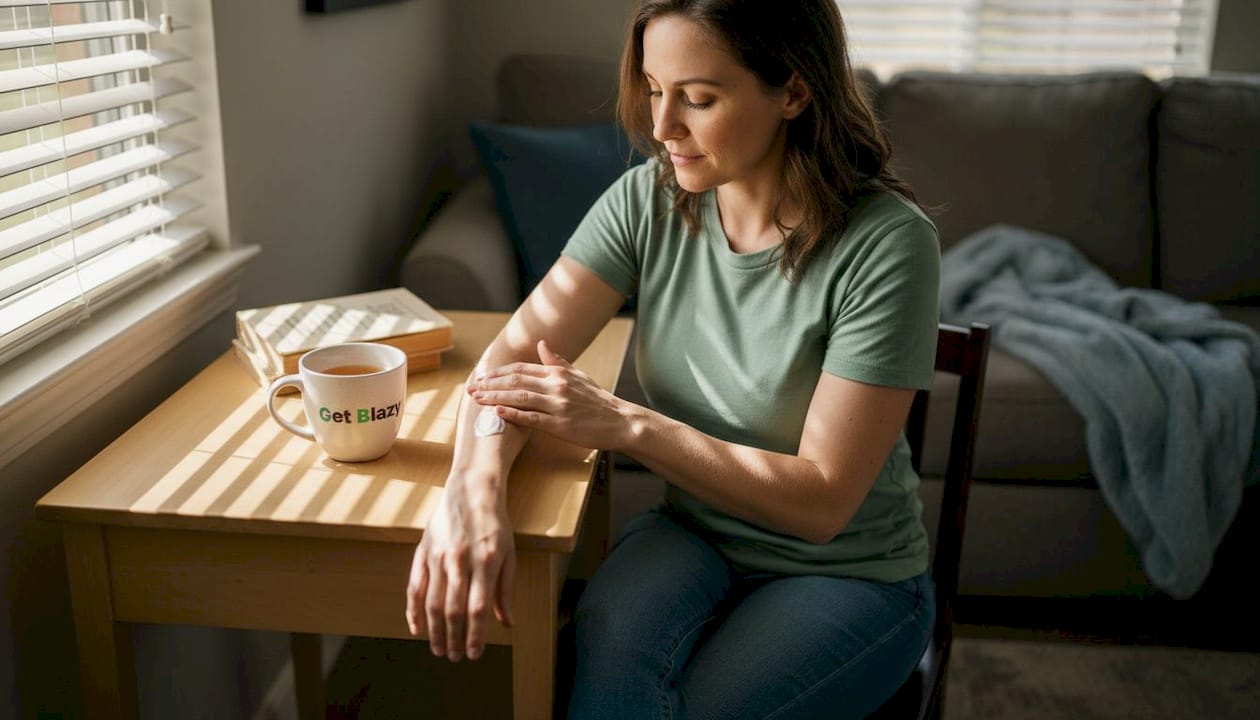
CBD topicals are products you apply directly to your skin. Think creams, balms, gels, salves, and patches. Unlike CBD oils you drop under your tongue or gummies you chew, topicals don’t have to travel through your digestive system or bloodstream to do their job. They work right where you put them.
Your skin isn’t just a passive barrier. It has its own endocannabinoid system (ECS), a biological network made up of receptors that help regulate inflammation, pain signals, and cellular balance. CBD topicals interact with the skin’s endocannabinoid system via CB1 and CB2 receptors, TRP channels, PPARs, and serotonin receptors. This is why you might feel soothing relief in a specific spot without feeling any effects in the rest of your body.
Key differences between CBD topicals and other forms:
- Topicals stay local, acting on the area where you apply them
- They don’t produce intoxication or alter your mental state
- Effects are felt faster in the targeted area compared to oral CBD
- They bypass the liver, so there’s no “first-pass” metabolism reducing their strength
| Feature | CBD Topical | CBD Oral (Tincture/Gummy) |
|---|---|---|
| Entry point | Skin surface | Digestive system |
| Effect area | Local (where applied) | Systemic (whole body) |
| Onset time | 15 to 45 minutes | 30 to 90 minutes |
| Intoxication risk | Very low | Low (depends on THC content) |
| Best for | Skin issues, localized pain | Anxiety, sleep, general wellness |
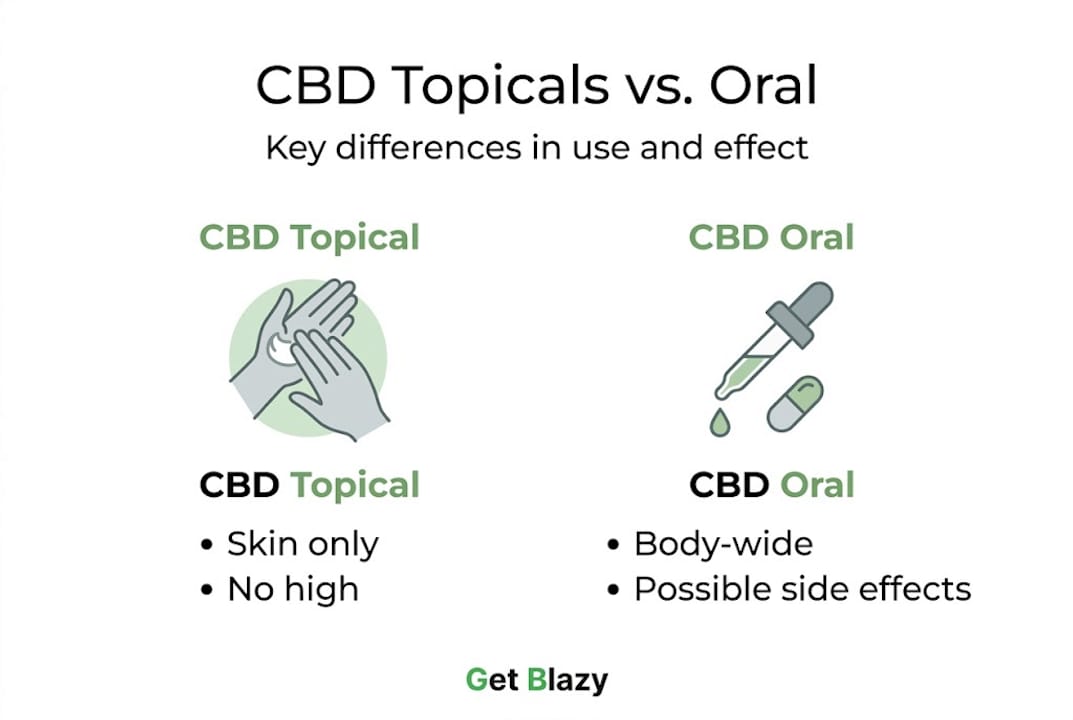
For Miami residents dealing with sunburned shoulders, sore calves after a run along the Rickenbacker Causeway, or irritated skin from humidity, topicals offer something oral CBD simply can’t: precision. The relief goes where you need it, not everywhere at once.
Types of CBD topicals: Traditional vs. transdermal
Not all CBD topicals behave the same way. There are two main categories, and knowing the difference will save you money and frustration.
Traditional topicals are your standard creams, balms, and gels. They sit in the upper layers of skin, targeting receptors near the surface. Traditional topicals act locally with quick onset and short duration, making them ideal for surface-level issues like skin irritation, minor inflammation, or post-workout soreness on muscle groups close to the skin.
Transdermal topicals are engineered to go deeper. They use absorption enhancers like alcohol or special emulsifiers to push CBD past the skin barrier and into the bloodstream. This creates a more systemic effect, similar to a slow-release patch. Transdermal CBD products use enhancers and may cause mild psychoactivity if they contain THC, which is worth knowing before you use one before heading to work.
| Category | Onset | Duration | Depth of effect | Best for |
|---|---|---|---|---|
| Traditional | 15 to 30 minutes | 2 to 4 hours | Surface/local | Skin care, minor soreness |
| Transdermal | 30 to 60 minutes | 6 to 12 hours | Systemic | Chronic pain, deeper relief |
Here’s a quick breakdown of common product examples for each type:
- Traditional: CBD balms, cooling gels, body butters, face creams
- Traditional: Muscle rubs with menthol or arnica added
- Transdermal: CBD skin patches worn for several hours
- Transdermal: Specially formulated serums with high-absorption carriers
Pro Tip: If you’re managing something like post-leg-day soreness or a sunburn after a day at South Beach, a traditional topical is your best bet. Save transdermal products for recurring issues like chronic joint discomfort, where sustained, deeper absorption makes more sense. Also check whether the topical CBD pharmacology of the formula you’re buying uses actual penetration enhancers or just claims it does.
CBD topicals for skin care: Evidence and benefits
Miami’s climate is hard on skin. The combination of intense UV exposure, humidity, salt air, and constant sweating creates a perfect recipe for acne, irritation, redness, and premature aging. This is one reason CBD topicals have become such a popular addition to local skin care routines.
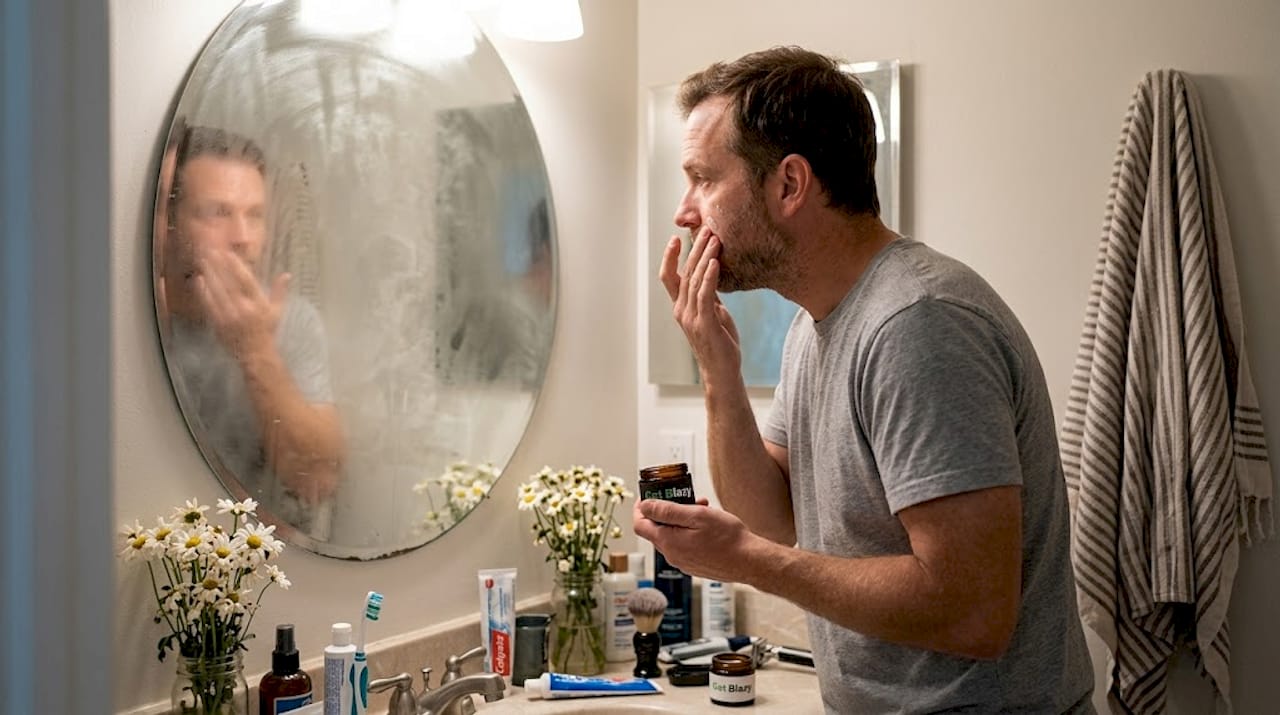
The research is early but genuinely interesting. Clinical studies suggest benefits of CBD topicals for acne, psoriasis, atopic dermatitis, and pruritus (itching). These aren’t fringe claims — they’re supported by peer-reviewed dermatology research looking at CBD’s anti-inflammatory, antioxidant, and antimicrobial properties.
Here’s what the evidence points to:
- Anti-inflammatory: CBD reduces cytokine activity in skin cells, calming redness and swelling
- Antioxidant: It neutralizes free radicals that contribute to sun damage and aging
- Antimicrobial: Research shows CBD can inhibit certain bacteria linked to acne
- Sebum regulation: CBD may reduce excess oil production, a key driver of breakouts
- Wound support: Early studies indicate potential support for skin healing and barrier repair
“Patients with chronic skin conditions like eczema and psoriasis have reported meaningful improvements in itching and inflammation after consistent topical CBD use.”
One advancing area worth knowing about is nanoformulations. Standard CBD molecules are too large to penetrate deep into skin layers easily. Nano-emulsified CBD breaks those molecules into smaller particles that work better on skin by absorbing more efficiently. If deep skin treatment is your goal, look for products that specify nano CBD or liposomal delivery on their label.
CBD topicals for muscle and joint relief: What does the science say?
After a long bike ride on the Key Biscayne loop or an intense beach volleyball session, you want something that works fast. CBD muscle rubs and balms have exploded in popularity across Miami gyms and wellness studios, and for good reason — but it’s worth being clear-eyed about what the science currently supports.
Honestly, the data is promising but still maturing. Pilot studies show mixed results for muscle recovery and delayed onset muscle soreness (DOMS) with CBD topicals, with results varying based on dosage and how well the product actually absorbs. This doesn’t mean topicals don’t work — it means individual results genuinely differ depending on the product quality and your biology.
Here’s when a CBD topical makes the most sense for muscle and joint support:
- Surface-level muscle soreness after a workout
- Minor joint stiffness in areas like wrists, knees, or ankles
- Post-run tightness in calves or hamstrings
- Inflammation around tendons from repetitive activity
- General recovery support as part of a broader wellness plan
For deeper joint pain, like hip arthritis or chronic knee issues, topicals may offer some comfort but shouldn’t replace a proper treatment plan.
Pro Tip: When shopping for a muscle-relief CBD topical, look for higher potency formulas with nanoformulations or added ingredients like menthol, camphor, or arnica. These don’t just mask the pain. They can enhance the anti-inflammatory action of CBD in the tissue. A 500mg or higher CBD concentration product is usually more effective for this purpose than entry-level options.
Is it safe and legal? CBD topicals and FDA regulations
This is one of the most common questions we hear from Miami customers, and it’s the right one to ask. The short answer: yes, CBD topicals are legal in Miami, but the details matter.
Federal law allows hemp-derived CBD products as long as they contain less than 0.3% THC. For topicals specifically, FDA treats CBD topicals as cosmetics under the Modernization of Cosmetics Regulation Act (MoCRA) and restricts drug-like claims. This means a brand cannot legally say their cream “treats arthritis” or “cures inflammation” — those are drug claims reserved for FDA-approved medications.
Under MoCRA, cosmetic facilities selling CBD topicals in the US had to register with the FDA and list their products by July 2025. Non-compliant brands are already receiving warning letters.
Here’s how to check if a CBD topical is safe and compliant before you buy:
- Look for a Certificate of Analysis (COA) from a third-party lab, confirming THC content below 0.3%
- Confirm the CBD potency listed on the label matches the COA results
- Check whether the brand is registered under MoCRA (you can verify on the FDA’s website)
- Avoid any product making disease treatment claims on its label
- Look for ingredient transparency: full list, no mystery compounds
One red flag to watch for is products making bold promises without any lab backing. If a brand says their cream “eliminates chronic pain” or “reverses skin disease,” that’s exactly the type of unapproved claim the FDA flags with warning letters. Stick to brands that let the lab results speak for themselves.
Our take: What most people get wrong about CBD topicals
Here’s what we’ve seen time and again: people grab a CBD balm expecting it to fix deep muscle tears or chronic joint degradation, and when it doesn’t, they write off CBD topicals entirely. That’s a mistake built on a misunderstanding of how local versus systemic relief actually works.
CBD topicals shine brightest when used for what they’re actually designed for: surface inflammation, skin health, and mild to moderate muscle soreness. Expecting them to reach a torn rotator cuff through three layers of tissue is like expecting an ice pack to cool your core temperature. Wrong tool, not a bad tool.
Formulation matters enormously, and most people ignore it completely. A 100mg CBD cream in a basic lotion base and a 500mg nano-emulsified CBD gel are not remotely the same product, even if they look similar on the shelf.
Our biggest piece of advice: read the lab results before the marketing copy. Third-party testing tells you exactly what you’re getting. The label tells you what the brand wants you to believe.
Find Miami’s best CBD topicals and wellness solutions
If you’ve made it this far, you already know more about CBD topicals than most people walking into a dispensary. Now it’s time to put that knowledge to work.
At Get Blazy CBD Dispensary, we carry a curated selection of lab-tested CBD topicals, from traditional balms and cooling gels to advanced transdermal patches, all sourced from reputable manufacturers and verified for purity and compliance. Located on Biscayne Blvd, we’re your Miami neighbor in wellness. Shop in-store for personalized guidance, or order online for fast, discreet delivery right to your door. Every product we carry meets the safety and quality standards this guide describes, so you can shop with confidence and focus on feeling better.
Frequently asked questions
Do CBD topicals get you high?
No, CBD topicals applied to the skin do not cause a high or any intoxicating effect because they act locally without significant absorption into the bloodstream. CBD topicals don’t produce psychoactive effects under normal use.
Are CBD topicals legal in Miami, Florida?
Yes, CBD topicals are legal in Miami as long as they contain less than 0.3% THC and meet federal cosmetic regulations under MoCRA. Federal law allows topicals within those THC limits.
Can you use CBD topicals for arthritis or chronic pain?
CBD topicals may offer some comfort for localized pain and surface inflammation, but the evidence for deeper pain like chronic arthritis is still mixed and limited. They work best as a complement to a broader care approach.
How do I know if a CBD topical is safe and compliant?
Always request or look up third-party lab results confirming THC content and CBD potency. FDA requires facility registration and product listing for cosmetic CBD brands under MoCRA, so check that the brand is compliant before purchasing.