Topical CBD products have surged in popularity as natural wellness solutions, yet many users remain uncertain about what these formulations can actually deliver. While preclinical studies demonstrate impressive anti-inflammatory and analgesic effects, human clinical trials present a more nuanced picture. Understanding how topical CBD interacts with your skin’s biology, what the current evidence supports, and which product innovations enhance effectiveness empowers you to make informed choices for localized pain relief and relaxation without systemic side effects.
Table of Contents
- Key takeaways
- How topical CBD works: the science behind localized relief
- Clinical evidence: what research says about topical CBD benefits
- Challenges and innovations: improving topical CBD effectiveness
- Using topical CBD safely and effectively in Miami wellness routines
- Explore natural wellness with quality topical CBD from Get Blazy
- FAQ
Key Takeaways
| Point | Details |
|---|---|
| Localized action and absorption | Topical CBD acts locally at the application site with minimal systemic absorption. |
| Preclinical promise mixed | Animal studies show anti inflammatory and analgesic effects, but human trials yield inconsistent results. |
| Mechanisms targeted broadly | CBD interacts with CB2 receptors, TRPV1 channels, PPARs, and adenosine receptors to modulate inflammation and pain signaling. |
| Clinical evidence challenges | Inconsistent outcomes stem from study design and dosing variations plus placebo effects. |
| Application best practices | Apply to clean dry skin and massage to improve absorption in receptor dense skin layers. |
How topical CBD works: the science behind localized relief
Your skin contains a sophisticated endocannabinoid system that regulates inflammation, pain signaling, and tissue repair. When you apply CBD topically, it interacts with CB1, CB2 receptors, and TRPV channels embedded throughout dermal and epidermal layers. These receptors serve as biological switches that control inflammatory responses and pain perception at the cellular level.
CBD modulates pro-inflammatory cytokines like TNF-alpha and interleukin-6, reducing the cascade of inflammatory signals that cause localized pain and swelling. It also activates peroxisome proliferator-activated receptors, which regulate oxidative stress and cellular metabolism. This multi-targeted approach explains why topical CBD addresses both acute inflammation and chronic discomfort simultaneously.
The analgesic effects stem from CBD’s ability to desensitize pain receptors while enhancing your body’s natural endocannabinoid signaling. Unlike oral CBD that circulates systemically, topical applications concentrate therapeutic compounds at specific sites with minimal bloodstream absorption. This localized action means you can target joint pain, muscle soreness, or skin inflammation without affecting your entire system.
Key receptors involved in topical CBD’s therapeutic effects include:
- CB2 receptors that regulate immune cell activity and inflammatory responses
- TRPV1 channels that control pain perception and temperature sensitivity
- PPARs that influence cellular metabolism and oxidative stress
- Adenosine receptors that modulate inflammation and tissue protection
Topical CBD also delivers antioxidant and moisturizing benefits that support skin barrier function. These secondary effects complement pain relief by reducing irritation and promoting tissue recovery at application sites.
Pro Tip: Apply topical CBD to clean, dry skin and massage thoroughly to enhance absorption through the dermal layers where receptors concentrate most densely.
Clinical evidence: what research says about topical CBD benefits
Animal studies provide compelling evidence for topical CBD’s therapeutic potential. Researchers found that CBD reduces joint pain and inflammation in rat models of osteoarthritis in a dose-dependent manner. Rats treated with topical CBD showed decreased joint swelling, improved limb function, and reduced inflammatory markers compared to control groups. These preclinical findings demonstrate clear biological mechanisms that translate CBD’s molecular actions into measurable pain relief.
Human clinical trials present a more complex picture. Some studies report meaningful pain reduction in athletes using topical CBD for exercise-related injuries, while others find no significant improvement versus placebo in arthritis patients. This inconsistency stems from multiple factors including varying CBD concentrations, different formulation types, diverse study populations, and inconsistent application protocols.
The mixed clinical outcomes likely reflect challenges in study design rather than CBD’s inherent ineffectiveness. Many trials use suboptimal doses, fail to account for individual absorption differences, or employ formulations with poor skin penetration. Additionally, placebo effects run particularly high in pain studies, making it difficult to isolate CBD’s specific contributions.
| Study Type | Key Findings | Limitations |
|---|---|---|
| Preclinical (animals) | Dose-dependent pain relief, reduced inflammation, improved joint function | Animal models may not perfectly predict human responses |
| Clinical trials (humans) | Some show pain reduction in athletes, others find no benefit in arthritis | Variable doses, formulations, and study designs limit comparability |
| Observational studies | Users report subjective improvement in localized pain | Lack of controls, potential placebo effects, self-selection bias |
Evidence for muscle recovery and relaxation benefits remains particularly limited. While users frequently report feeling more relaxed after applying topical CBD, controlled studies have not established clear mechanisms for systemic relaxation from topical application. The localized nature of topical CBD means it primarily affects tissues at application sites rather than producing body-wide effects.
Researchers continue investigating optimal dosing protocols and formulation strategies to improve clinical outcomes. Future studies employing standardized products, consistent application methods, and appropriate control groups will clarify which conditions benefit most from topical CBD therapy.
Factors contributing to mixed clinical results include:
- Inadequate CBD concentrations failing to reach therapeutic thresholds
- Poor bioavailability due to CBD’s lipophilic molecular structure
- Inconsistent application frequency and duration across studies
- Heterogeneous patient populations with varying pain conditions
- Lack of standardized outcome measures for pain assessment
Challenges and innovations: improving topical CBD effectiveness
CBD’s lipophilic nature creates significant absorption barriers. The compound struggles to penetrate the skin’s outer lipid barrier, limiting how much active ingredient reaches target receptors in deeper tissue layers. Additionally, CBD degrades when exposed to light, heat, and oxygen, reducing product potency over time and compromising therapeutic effectiveness.
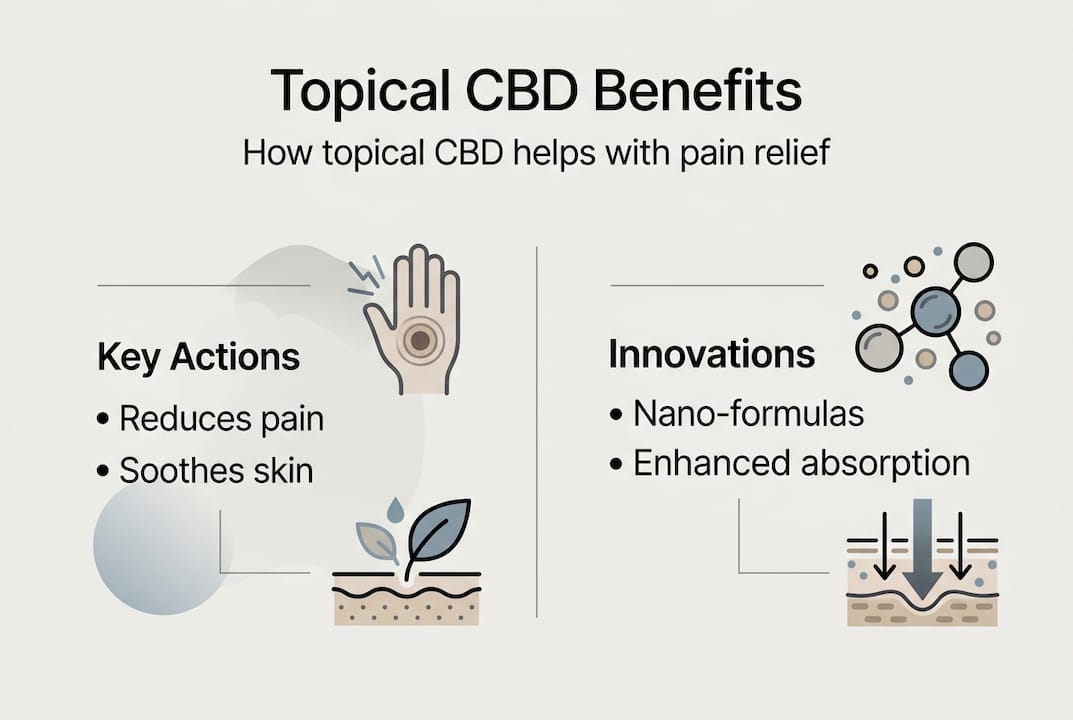
Formulation scientists have developed several strategies to overcome these limitations. Nanoencapsulation enhances topical CBD delivery by reducing particle size to nanometer scale, dramatically improving skin penetration and bioavailability. These advanced formulations protect CBD molecules from degradation while facilitating transport through skin layers.
Advanced delivery systems that improve topical CBD effectiveness include:
- Nanoemulsions that create tiny CBD droplets suspended in water-based carriers
- Liposomal encapsulation that mimics cell membrane structure for enhanced absorption
- Transdermal patches that provide sustained release over extended periods
- Microemulsion gels that combine multiple penetration enhancers
- Solid lipid nanoparticles that protect CBD while improving stability
| Formulation Type | Absorption Rate | Stability | Clinical Benefits |
|---|---|---|---|
| Standard cream | 5-10% penetration | Moderate degradation | Limited depth, inconsistent effects |
| Nano-enhanced | 40-60% penetration | High stability | Deeper tissue reach, faster onset |
| Liposomal | 30-50% penetration | High stability | Sustained release, prolonged effects |
Clinical applications of nano-enhanced topicals show promising results. Studies on inflammatory skin conditions demonstrate that nanoformulated CBD achieves higher tissue concentrations and produces more consistent therapeutic effects compared to standard preparations. Patients using nano-enhanced products report faster onset of relief and longer-lasting benefits.
Product stability improvements also matter significantly. Advanced formulations incorporate antioxidants, light-protective packaging, and pH-optimized carriers that preserve CBD potency throughout shelf life. These innovations ensure that the concentration listed on the label accurately reflects what you apply to your skin.
Pro Tip: Choose products with third-party certificates of analysis confirming CBD content and purity, and look for nano-enhanced formulations that list particle size specifications for maximum therapeutic benefit.
Using topical CBD safely and effectively in Miami wellness routines
Topical CBD demonstrates an excellent safety profile with minimal systemic absorption and mild side effects. Most users experience no adverse reactions, while a small percentage report temporary skin dryness, redness, or mild irritation at application sites. These effects typically resolve within hours without requiring treatment.
The localized nature of topical application means CBD concentrates at target tissues without entering your bloodstream in significant amounts. This characteristic makes topical CBD particularly suitable for individuals seeking natural pain relief without systemic effects or concerns about drug interactions.
Follow these steps for optimal topical CBD application:
- Clean and dry the target area thoroughly to remove oils and debris that block absorption
- Apply a generous amount of product directly to the painful or inflamed site
- Massage firmly in circular motions for 60-90 seconds to enhance penetration
- Allow 15-20 minutes for absorption before covering with clothing or bandages
- Reapply every 4-6 hours as needed for sustained relief throughout the day
Product selection significantly impacts your results. Prioritize brands that provide third-party lab testing confirming CBD content, absence of contaminants, and accurate labeling. Look for formulations enhanced with penetration technologies like nanoemulsions or liposomes that improve bioavailability. Consider additional ingredients such as menthol, arnica, or essential oils that complement CBD’s anti-inflammatory effects.
Important precautions for safe topical CBD use include:
- Perform a patch test on a small skin area before full application
- Monitor for allergic reactions or unexpected skin responses
- Avoid applying to broken skin, open wounds, or mucous membranes
- Consult healthcare providers if you have chronic conditions or take medications
- Store products in cool, dark places to maintain potency and stability
Miami consumers should verify that products comply with federal hemp regulations requiring less than 0.3% THC content. Quality manufacturers provide detailed sourcing information, extraction methods, and formulation specifics that demonstrate product integrity and safety.
Pro Tip: Incorporate topical CBD as one component of a comprehensive wellness approach that includes adequate hydration, quality sleep, stress management, and appropriate physical activity for maximum benefit.
Explore natural wellness with quality topical CBD from Get Blazy
Now that you understand how topical CBD works and what science supports its use, finding reliable products becomes your next step. Miami residents seeking natural localized pain relief have convenient access to curated selections of lab-tested topical CBD formulations designed for effective wellness support.

Get Blazy offers premium hemp-derived topical products sourced from reputable manufacturers and verified through third-party testing for purity and potency. Whether you need targeted relief for joint discomfort, muscle soreness, or skin inflammation, you can explore various formulation types including nano-enhanced options that maximize absorption and effectiveness. Visit our Biscayne Boulevard location or order online for fast, discreet delivery throughout Miami.
FAQ
Is topical CBD effective for all types of pain?
Topical CBD works best for localized joint inflammation and superficial pain conditions where you can apply the product directly to affected areas. Current evidence shows less consistent results for deep muscle soreness or neuropathic pain that originates from nerve damage. For chronic pain conditions or systemic issues, consult healthcare providers about whether topical CBD fits appropriately into your comprehensive treatment plan.
Can topical CBD cause side effects or allergic reactions?
Most people tolerate topical CBD well, experiencing no adverse effects from regular use. A small percentage may develop mild skin dryness, temporary redness, or localized irritation that resolves quickly without intervention. Always patch test new products on a small area before widespread application, and discontinue use if you notice persistent reactions or unexpected skin changes.
How is topical CBD different from oral CBD products?
Topical CBD acts locally at application sites with minimal bloodstream absorption, targeting specific areas of pain or inflammation without systemic effects. Oral CBD circulates throughout your entire body, potentially affecting multiple systems but also carrying higher risks of side effects and drug interactions. Choose topical applications when you want targeted relief without psychoactive effects or whole-body impact.
Are nano-enhanced topical CBD products worth trying?
Nano-enhanced formulations significantly improve skin penetration and bioavailability compared to standard topical CBD products. These advanced delivery systems may provide faster onset of relief, deeper tissue penetration, and more consistent therapeutic effects. Look for reputable brands that specify particle size and provide third-party testing to ensure you receive genuine nano-formulated products rather than marketing claims without substance.