TL;DR:
- Buying CBD online in Miami requires verifying batch-specific lab results and compliance with Florida laws.
- Always check that COAs are recent, accurate, and accessible via scannable QR codes linked to accredited labs.
- Many pitfalls include skipping COA verification, trusting outdated or incomplete lab reports, and ignoring Florida-specific labeling requirements.
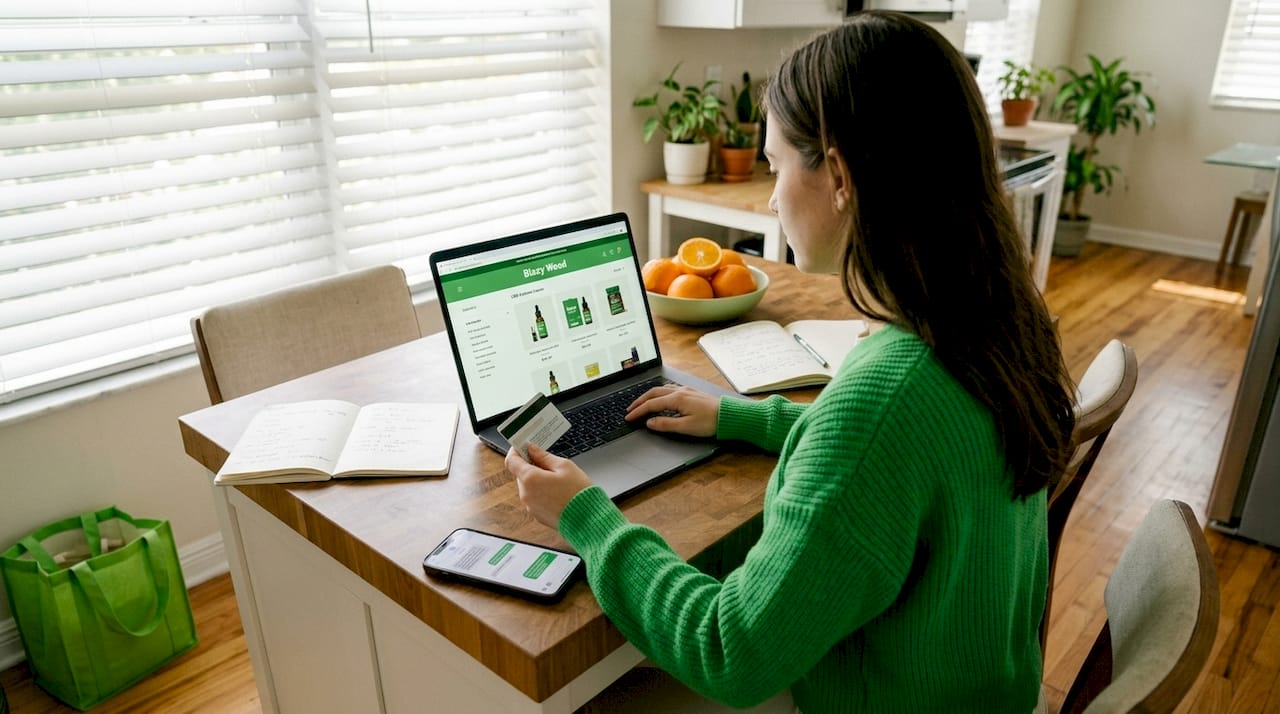
Shopping for CBD online in Miami sounds simple until you realize how much can go wrong. Products get mislabeled. Lab results get faked or outdated. And Florida has specific rules that generic buying guides never mention. If you’ve ever stared at a product page wondering whether that COA (Certificate of Analysis) link is legit, or whether the THC percentage actually meets state standards, you’re not alone. This guide walks you through every step of buying CBD online safely in Miami, so you can protect your wellness, your wallet, and your peace of mind.
Table of Contents
- Know the legal and safety basics for Miami CBD buyers
- Check product requirements and shop preparation
- How to verify product quality and compliance
- Common mistakes Miami shoppers make buying CBD online
- Why most CBD buying guides miss the Miami difference
- Ready to buy CBD? Make your next step safe and simple
- Frequently asked questions
Key Takeaways
| Point | Details |
|---|---|
| Understand Florida rules | Only hemp-derived CBD with 0.3% or less delta-9 THC and proper labeling are legal in Miami. |
| Always check the COA | Batch-matched Certificates of Analysis verify a CBD product’s safety and legality. |
| Use scannable QR codes | Florida-compliant CBD products should use QR codes that link clearly to complete, third-party lab results. |
| Avoid common mistakes | Don’t skip COAs, ignore batch numbers, or buy mislabeled products lacking clear Florida compliance. |
Know the legal and safety basics for Miami CBD buyers
Before you add anything to your cart, you need to understand Florida’s specific rules around CBD. This isn’t just about following the law. It’s about knowing exactly what you’re buying and why it matters for your health.
Miami buyers should start with one non-negotiable rule: any hemp-derived CBD product you purchase online must contain no more than 0.3% delta-9 THC by dry weight. That threshold is what legally separates hemp from marijuana under both federal and Florida state law. According to Florida’s guidelines for over-the-counter hemp products, hemp-derived CBD must comply with Florida’s labeling and testing requirements, including scannable QR codes that link directly to lab results, known as COAs.
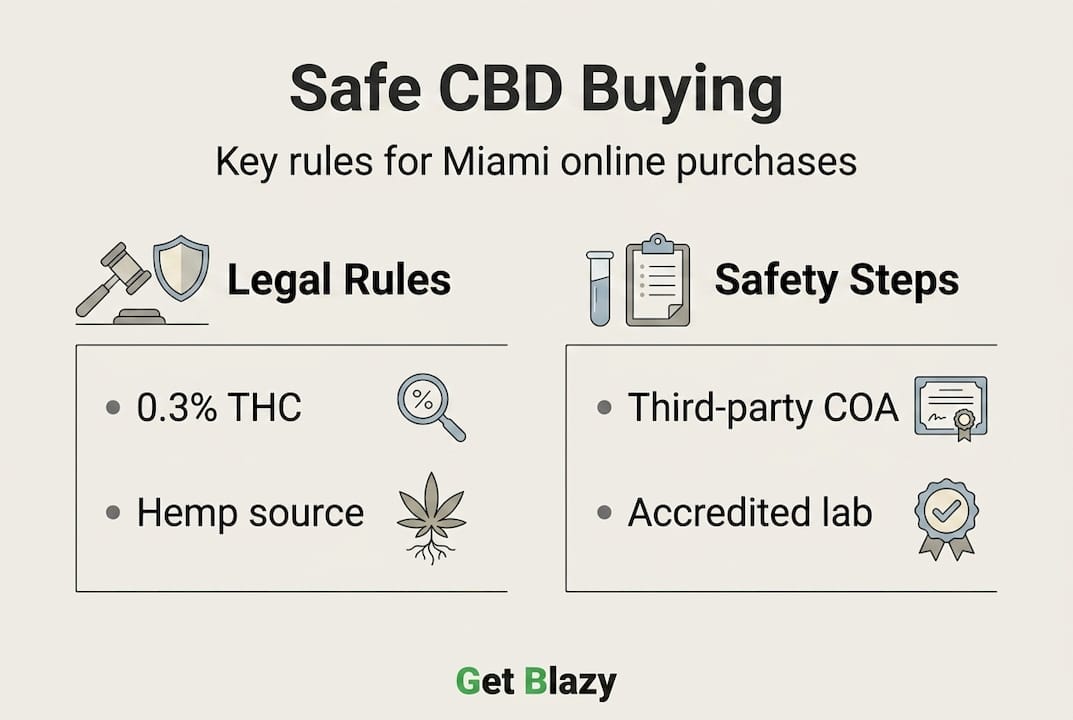
Florida also requires batch-level labeling. That means every product sold in the state must display information tied to the specific production run it came from, not just a generic brand label. This is how consumers can trace a product back to its test results. If a product doesn’t have a batch number or a functioning QR code, that’s your first warning sign.
Here’s what Miami residents must know about legal and safety compliance before buying:
- Hemp-derived only: The product must come from hemp, not marijuana, regardless of how it’s marketed
- THC limit: Delta-9 THC must be at or below 0.3% by dry weight on the finished product
- Batch-level labeling: Look for a lot or batch number printed directly on the packaging
- Scannable QR codes: These must link to the product’s Certificate of Analysis
- Third-party testing: Lab results must come from an independent, accredited testing facility
“A product without a scannable code or missing batch information isn’t just suspicious. It’s potentially out of compliance with Florida law, and you have no way of verifying what you’re actually consuming.”
Safety goes beyond legality, too. Mislabeling is one of the most widespread problems in the CBD market, and it affects buyers in every state. Explore online CBD shopping options that prioritize compliance and transparency so you’re not starting from scratch with an unknown vendor.
Check product requirements and shop preparation
With the legal framework clear, the next step is preparing yourself before you even start browsing products. Informed buyers get better outcomes. Period.
Start by identifying what product type you’re looking for. CBD products generally fall into three categories:
| Product type | What it contains | Best for |
|---|---|---|
| Full-spectrum | CBD + all cannabinoids including up to 0.3% THC | Entourage effect, broad wellness support |
| Broad-spectrum | CBD + other cannabinoids, THC removed | THC-sensitive users, balance without THC |
| Isolate | Pure CBD only, no other cannabinoids | Precise dosing, zero THC preference |
Each type has different compliance considerations, especially around THC limits. Full-spectrum products carry the highest risk of THC mislabeling, so their COAs need extra scrutiny.
Next, gather the basic information you’ll need to verify any product you find:
- The product name and batch/lot number from the listing or packaging
- The intended use (sleep, pain relief, anxiety support) since this affects dosing and form factor
- The CBD concentration per serving to compare against what the COA says
- The name of the testing laboratory so you can independently look them up
One of the most important evidence-based buying steps is verifying third-party COAs before any purchase. Third-party means the lab has no financial relationship with the brand. That independence is what makes the results credible.
Pro Tip: Before you commit to a new vendor, look up their testing lab separately. Legitimate labs are accredited by organizations like ISO 17025. A quick search of the lab’s name should pull up their accreditation status and history.
Now look at trusted CBD marketplaces that already pre-screen their vendors and products. Starting with a curated source dramatically reduces the research burden and protects you from bad actors who rely on buyers skipping their due diligence.
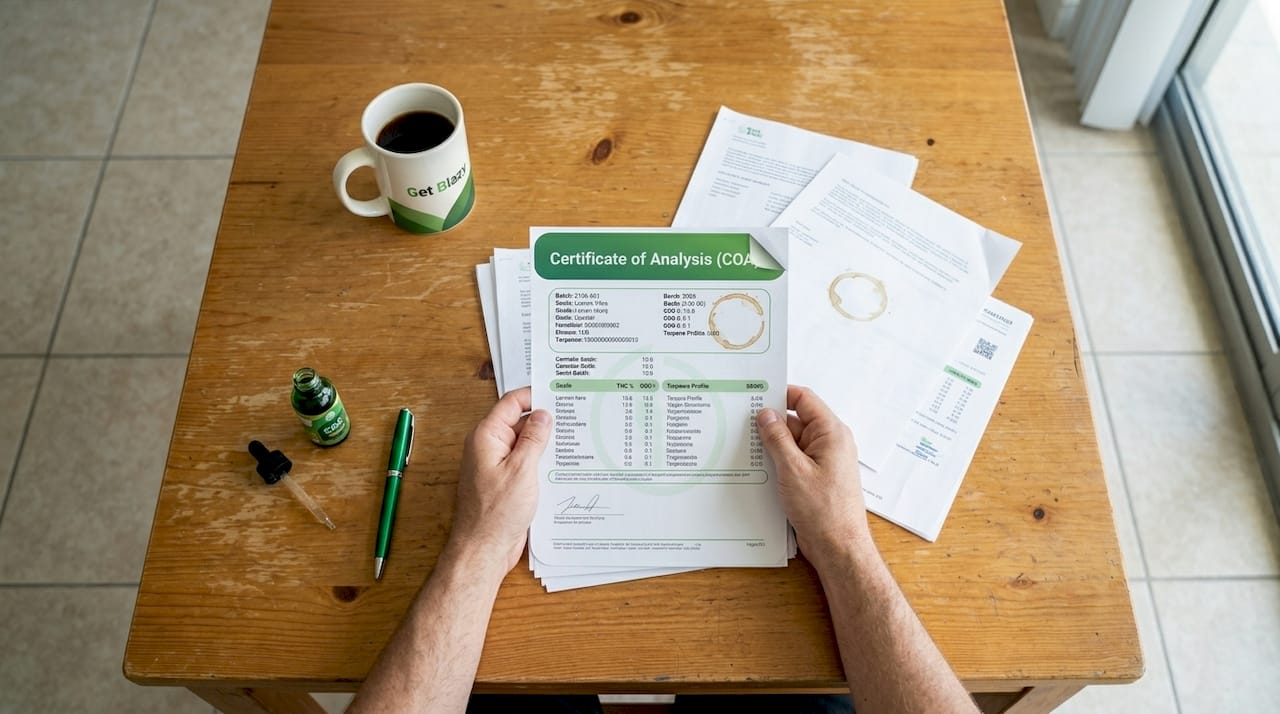
You should also understand what a COA actually looks like. It’s a multi-page document that lists cannabinoid levels (CBD, THC, CBG, and others), as well as contaminant screening results for pesticides, heavy metals, residual solvents, and microbials. If a COA only shows cannabinoid content but skips contaminant panels, treat that as incomplete and potentially concerning.
How to verify product quality and compliance
You’ve identified your product type, you’ve found a vendor, and you’re looking at a COA. Now comes the critical part: actually reading and matching that document to what you’re about to buy.
Here’s a step-by-step verification process designed specifically for Miami buyers:
- Match the batch number: The batch or lot number on the COA must match the one printed on the product or listed in the product description. If those numbers don’t match, the COA is irrelevant to what you’re buying.
- Confirm the test date: COAs should be recent, ideally within the past 12 months. An older COA doesn’t reflect the current batch and may not meet current Florida standards.
- Check total THC content: For full-spectrum products, confirm that total THC (including delta-9 and THCA) stays within Florida’s 0.3% threshold. For broad-spectrum and isolate, THC should be undetected or at trace levels.
- Review cannabinoid panel completeness: The COA should list multiple cannabinoids, not just CBD. A credible lab tests for the full profile.
- Scan for contaminants: Look for pesticide, heavy metal, residual solvent, and microbial sections. All results should show “pass” or “ND” (non-detected) where applicable.
- Verify the lab’s identity: The lab’s name, accreditation number, and contact information should appear on the COA. Cross-reference this with the lab’s own website.
- Match label claims to COA data: If the label says 1000mg CBD per bottle, the COA should confirm that concentration. A batch-matched COA that confirms THC numbers align with the product type is your best protection.
When comparing your three main product types, here’s a quick compliance reference:
| Product type | THC on COA should show | Extra checks needed |
|---|---|---|
| Full-spectrum | ≤ 0.3% delta-9 THC | Confirm total THC includes THCA |
| Broad-spectrum | ND (non-detected) or trace | Check for residual cannabinoids |
| Isolate | ND | CBD concentration match is critical |
Red flags to watch for in any COA:
- No batch number or a batch number that doesn’t match the product
- A test date that’s more than a year old
- Missing contaminant panels (especially pesticides and heavy metals)
- THC levels that don’t match the product type’s claims
- A testing lab you cannot find independently online
- COA presented as a screenshot or image instead of a downloadable PDF
Pro Tip: Always download the COA as a PDF directly from the lab’s website when possible, not just from the brand’s website. Some brands have been caught uploading doctored documents. A quick Google search of the lab name plus the batch number can sometimes pull up the original.
Once you know how to vet trusted brands, the process becomes second nature. A reliable vendor makes COA verification easy, not a scavenger hunt.
Common mistakes Miami shoppers make buying CBD online
Even buyers who read guides like this one make errors. Knowing the most common mistakes ahead of time helps you stay sharp, especially in a fast-moving market where new products appear constantly.
Mistake 1: Skipping the COA entirely. This is the single most dangerous shortcut. Many buyers see a product with good reviews and a recognizable brand name and assume the product is safe. But only 31% of tested CBD products in a widely cited JAMA study actually contained the amount of CBD listed on the label. That study also found widespread mislabeling related to THC not being disclosed at all. Reviews don’t protect you. COAs do.
Mistake 2: Ignoring batch-specific documentation. Some brands post a single COA for an entire product line rather than batch-specific results. That means the document you’re reviewing might reflect a run from two years ago, made with different raw materials, at a different concentration. Always match the batch number.
Mistake 3: Trusting QR codes that don’t work. Florida specifically requires scannable QR codes that link to lab results. If you scan a code on a Miami-purchased CBD product and it takes you to a homepage, a 404 error, or a generic FAQ, that product fails a basic compliance test. Stop and walk away.
Mistake 4: Not checking for Florida-specific compliance. National CBD guides rarely mention state-level requirements. Florida’s rules around batch labeling, QR code functionality, and COA accessibility are stricter than federal minimums. Products that pass federal muster may still be non-compliant in Florida. Buying a non-compliant product doesn’t just waste your money. It could mean purchasing something that gets flagged or confiscated.
Mistake 5: Prioritizing price over documentation. Cheap CBD is appealing, especially when you’re buying in bulk. But low prices often signal cut corners in testing or sourcing. A product with a $15 price tag and a sketchy COA is a false economy compared to a $45 product with complete, verifiable lab documentation.
“The goal isn’t to find the cheapest CBD. It’s to find the most honest CBD. Honest products show you exactly what they contain, batch by batch, every single time.”
Here’s a quick checklist to review before any Miami online CBD purchase:
- COA is batch-specific and matches the product listing
- Test date is within the past 12 months
- THC content is within Florida’s legal threshold
- Contaminant panels are included and show passing results
- QR code on packaging links directly to the COA
- Testing lab is independently verifiable
Why most CBD buying guides miss the Miami difference
Here’s the honest take that most articles won’t give you: generic CBD buying advice is built for a generic national buyer. That buyer doesn’t exist in Miami. And following advice written for someone in a state with looser hemp rules or a less developed retail market can leave you exposed in ways you won’t realize until something goes wrong.
Miami sits at an interesting intersection. The city has a rapidly expanding wellness market, a sophisticated consumer base, and Florida’s specific regulatory environment layered on top. That combination means there are more products available here than in most markets, more vendors competing for your attention, and more risk of slipping through the cracks of national quality guidance.
When you build your CBD buying strategy around Miami’s actual rules rather than national averages, you eliminate an entire category of risk. The QR code requirement is a perfect example. Most national guides say “look for a COA.” Florida goes further and requires that COA to be accessible by scan, on every product, linked to the specific batch. That’s a meaningful difference that a national guide would never highlight.
There’s also a local market literacy issue. Miami has plenty of stores and online sellers moving product fast, and not all of them are equally rigorous about compliance. The good vendors stand out because they make COA access easy, batch information visible, and lab names searchable. The ones cutting corners rely on buyers not knowing what to look for.
Our experience working with Miami wellness customers has shown us one consistent truth: buyers who know what to ask for get dramatically better products. The question isn’t just “is this CBD legal?” It’s “can I trace this specific product, from this specific batch, back to a specific accredited lab result?” That question separates confident shoppers from frustrated ones.
Ready to buy CBD? Make your next step safe and simple
You now have a real framework for buying CBD online in Miami, not a vague suggestion to “check the label” but a specific, step-by-step process that covers Florida’s rules, COA verification, product type differences, and the most common traps buyers fall into.
At Get Blazy CBD Dispensary on Biscayne Blvd, every product we carry is sourced from manufacturers who meet Florida’s labeling and testing standards. We stock CBD tinctures, gummies, vape products, oils, and topicals, and you can verify the lab documentation before you buy. Whether you visit us in store or order online for fast, discreet delivery across Miami, the process is built around your confidence. Explore legal CBD options at Get Blazy and skip the guesswork entirely.
Frequently asked questions
Is it legal to buy CBD online in Miami, Florida?
Yes, as long as the product is hemp-derived and contains at most 0.3% delta-9 THC and meets Florida’s labeling and lab testing requirements, including COA accessibility via QR code.
What is a COA and why does it matter for online CBD shopping?
A COA is a Certificate of Analysis, a third-party lab report confirming what’s actually in a CBD product. Because CBD can be mislabeled, checking a COA before buying is the most important step to protect yourself from unsafe or inaccurate products.
How do I check if a CBD product is legal and safe before buying?
Look for a batch-matched COA from a third-party accredited lab, confirm THC numbers align with the product type, and make sure the scannable QR code on the packaging links directly to complete lab results.
What’s the risk if I skip checking a CBD product’s COA?
You could end up with something mislabeled, unsafe, or illegal. A JAMA study found that only 31% of products tested contained the CBD amount stated on the label, with widespread THC mislabeling as well.