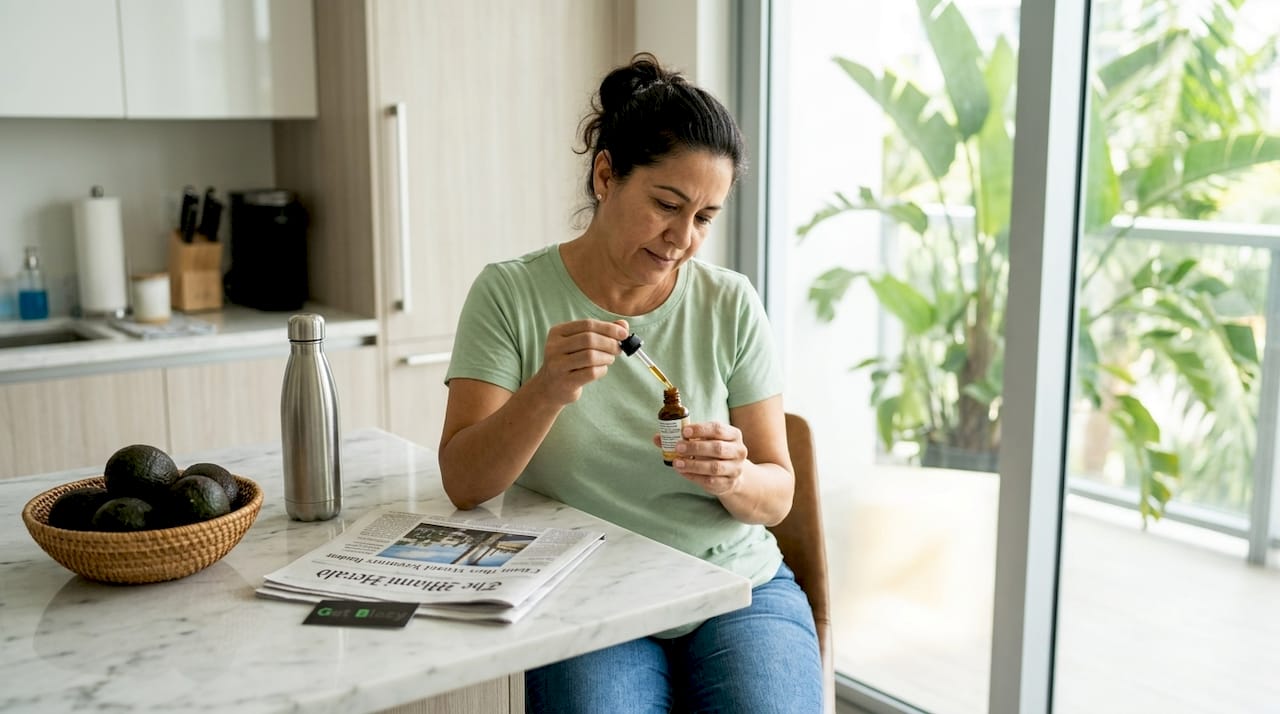
You want real relief from stress, chronic tension, or poor sleep, and you’ve heard CBD oil might help. But between the legal questions, the overwhelming product options, and the conflicting information online, it’s hard to know where to start. Miami adults are increasingly turning to hemp-derived CBD oil as part of their daily wellness routine, and for good reason. This guide cuts through the noise and gives you a clear, practical roadmap: what’s legal, what to buy, how to use it, what to realistically expect, and how to stay safe every step of the way.
Table of Contents
- Understanding CBD oil: legal basics and what to buy
- How to use CBD oil: step-by-step guidance
- Expected benefits and evidence: what can CBD oil really do?
- Safety, side effects, and when to avoid CBD oil
- How to track results and adjust your CBD routine
- Where to buy trustworthy CBD oil in Miami
- Frequently asked questions
Key Takeaways
| Point | Details |
|---|---|
| Legal and safe use | Miami adults can use hemp-derived CBD oil that’s legally compliant and third-party tested. |
| Start low, go slow | Begin with a small CBD dose, increase gradually, and monitor effects for best results. |
| Modest, real benefits | Most people experience small improvements in stress, pain, or sleep—results vary. |
| Know side effects | Common side effects include drowsiness and dry mouth; check interactions and consult your doctor. |
| Buy quality products | Choose only tested, reputable CBD sources from licensed Miami retailers or trusted marketplaces. |
Understanding CBD oil: legal basics and what to buy
Before you spend a dollar, you need to know what’s actually legal in Miami. The good news is straightforward: CBD oil is legal in Florida for adults when it’s hemp-derived, contains less than 0.3% delta-9 THC, is third-party tested, and is purchased from a licensed retailer with a proper Certificate of Analysis (COA) or QR code on the label. You must be 18 or older to purchase most CBD products. If you’re buying vape or inhaled products, the age minimum jumps to 21.
Knowing the law is step one. Choosing a quality product is step two. Here’s what to look for on every label:
- Third-party lab tested: An independent lab, not the brand itself, verified the contents.
- COA or QR code: Scan it. It should show cannabinoid levels, THC content, and contaminant screening.
- Hemp-derived source: Not marijuana-derived. This is the legal distinction.
- Clear dosage information: Milligrams per serving, not just per bottle.
- No vague health claims: Reputable brands don’t promise to cure anything.
Red flags to avoid: No COA available, prices that seem too good to be true, no ingredient list, claims of “100% THC-free” without lab proof, and products sold from unlicensed gas stations or pop-up shops.
Here’s a quick comparison of the most common CBD oil product types you’ll find in Miami:
| Product type | How it’s used | Onset time | Best for |
|---|---|---|---|
| Tincture (oil drops) | Under the tongue | 15 to 45 minutes | Flexible dosing, fast relief |
| Capsules/softgels | Swallowed with water | 45 to 90 minutes | Consistent daily dosing |
| Topicals (creams, balms) | Applied to skin | 15 to 30 minutes | Localized muscle or joint discomfort |
| Edibles (gummies) | Eaten/chewed | 45 to 120 minutes | Convenience, longer-lasting effect |
With legal basics clear, you’re ready to choose the right CBD oil for your needs.
How to use CBD oil: step-by-step guidance
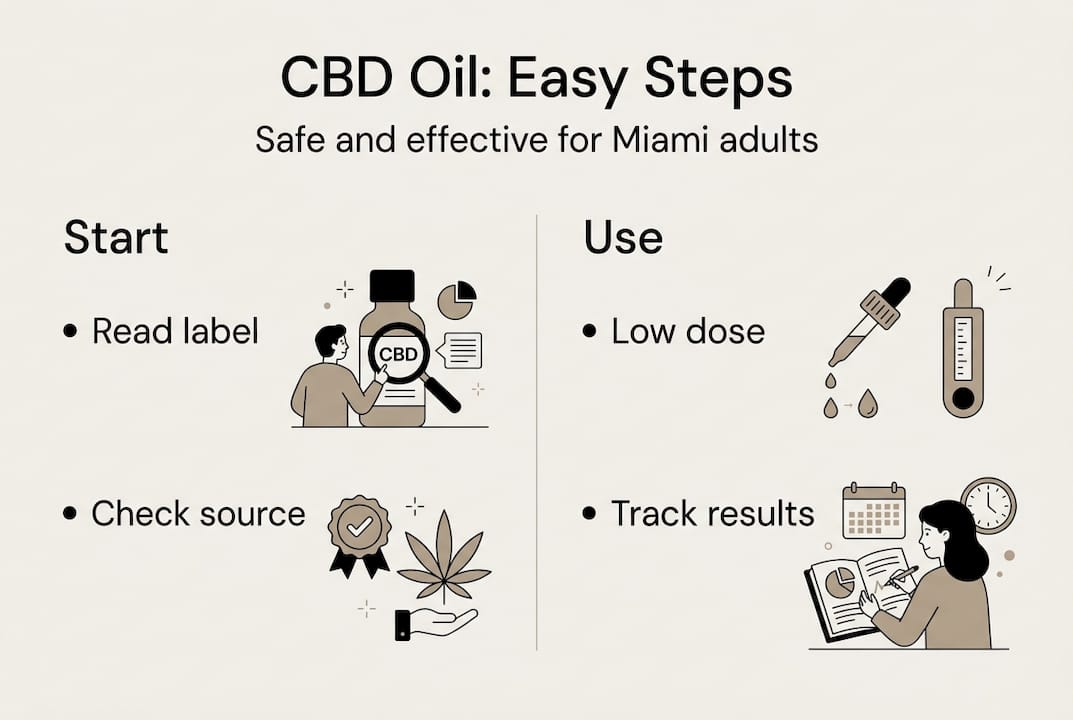
First-time users often overthink this. The process is simpler than it looks. Follow these steps and you’ll build a routine that actually works:
- Pick your product type. Tinctures are the most flexible starting point for most people. They let you adjust your dose easily and work faster than edibles.
- Read the label carefully. Find the milligrams (mg) per serving. A 30ml bottle with 1,500mg total contains 50mg per 1ml dropper. Do the math before you dose.
- Start at 5 to 10mg per dose. The Arthritis Foundation’s CBD guidance recommends starting low and titrating slowly, meaning you increase only after several days at the same dose.
- Use the sublingual method. Place drops under your tongue and hold for 30 to 60 seconds before swallowing. This allows faster absorption through the mucous membranes.
- Take it at the same time each day. Consistency matters. CBD builds up in your system, and irregular use makes it harder to evaluate whether it’s working.
- Increase gradually if needed. After 3 to 5 days with no noticeable effect, increase by 5mg. Repeat until you find your sweet spot.
Pro Tip: Take your CBD oil with or right after a meal that contains healthy fats, like avocado, olive oil, or nuts. CBD is fat-soluble, meaning fat helps your body absorb significantly more of it.
Here’s a quick-reference table for the main administration methods:
| Method | Onset time | Duration | Pros | Cons |
|---|---|---|---|---|
| Sublingual (under tongue) | 15 to 45 min | 4 to 6 hours | Fast, precise dosing | Taste can be strong |
| Topical (skin application) | 15 to 30 min | 2 to 4 hours | Targeted relief, no systemic effect | Limited to local area |
| Edible (gummies, capsules) | 45 to 120 min | 6 to 8 hours | Easy, discreet, consistent | Slower onset, harder to adjust |
One important note on cost: doses up to 100mg per day can get expensive quickly, so starting low isn’t just safer, it’s also smarter for your wallet. Maintaining a stable dose also helps keep your blood levels consistent, which is key for evaluating real results.
With basics and product choice settled, let’s talk about what CBD oil can realistically do for you.
Expected benefits and evidence: what can CBD oil really do?
Here’s where honesty matters most. CBD oil has genuine potential, but it’s not magic. Setting accurate expectations protects you from disappointment and helps you use it more effectively.
Possible benefits supported by current research:
- Relaxation and anxiety reduction: Many users report feeling calmer and less reactive to stress.
- Improved sleep quality: Particularly for those whose sleep is disrupted by anxiety or discomfort.
- Mild to moderate pain relief: Especially for muscle soreness, joint stiffness, and inflammation-related discomfort.
- General sense of balance: Some users describe a subtle but consistent improvement in daily mood and tension.
The numbers are encouraging but measured. 70% of high-quality studies showed improvement in anxiety symptoms among CBD users. For pain, systematic reviews show that 21% of CBD users reported meaningful pain relief compared to 17% on placebo. That’s a real difference, but a modest one.
What does this mean for you? CBD works best as a complement to your wellness routine, not a replacement for medical care. If you’re managing a diagnosed condition, talk to your doctor before starting. Most people who benefit from CBD describe subtle, gradual improvements rather than dramatic overnight changes. That’s normal and worth expecting.
Understanding realistic benefits makes it just as vital to know how to avoid problems.
Safety, side effects, and when to avoid CBD oil
CBD is generally well-tolerated, but it’s not without risks. Knowing the side effect profile helps you catch problems early and use it more safely.
Common side effects to watch for:
- Dry mouth: Drink more water, especially in Miami’s heat.
- Drowsiness or fatigue: Especially at higher doses. Don’t drive until you know how CBD affects you.
- Diarrhea or GI upset: More common with edibles and higher doses.
- Decreased appetite: Usually mild and temporary.
- Elevated liver enzymes: Rare but possible with long-term high-dose use.
“CBD may cause somnolence (drowsiness) in 24 to 28% of users and gastrointestinal effects in up to 22%.” This is why starting low and monitoring your response is so important, especially in the first two weeks.
Drug interactions are the most serious concern. CBD interacts with CYP3A4 and CYP2C19 enzymes, which process many common medications including warfarin (a blood thinner), clobazam (an anti-seizure drug), tacrolimus (used after organ transplants), certain opioids, and some antidepressants. If you take any prescription medication, this is not optional advice.
Pro Tip: Before starting CBD oil, bring your full medication list to your doctor or pharmacist and ask specifically about CBD interactions. A five-minute conversation can prevent a serious problem.
Who should avoid CBD oil altogether:
- Pregnant or breastfeeding women
- People with significant liver disease
- Elderly adults on multiple medications without physician oversight
- Anyone planning to drive or operate machinery until they know their personal response
Note: CBD is not FDA-approved for most uses. The only exception is Epidiolex, a prescription CBD medication for specific seizure disorders. Everything else is a wellness supplement, not a medicine.
After practicing safe use, it helps to know what success actually looks like.
How to track results and adjust your CBD routine
Most people quit too early or change their dose too fast. Tracking your experience removes the guesswork and helps you make smarter decisions.
Follow this process:
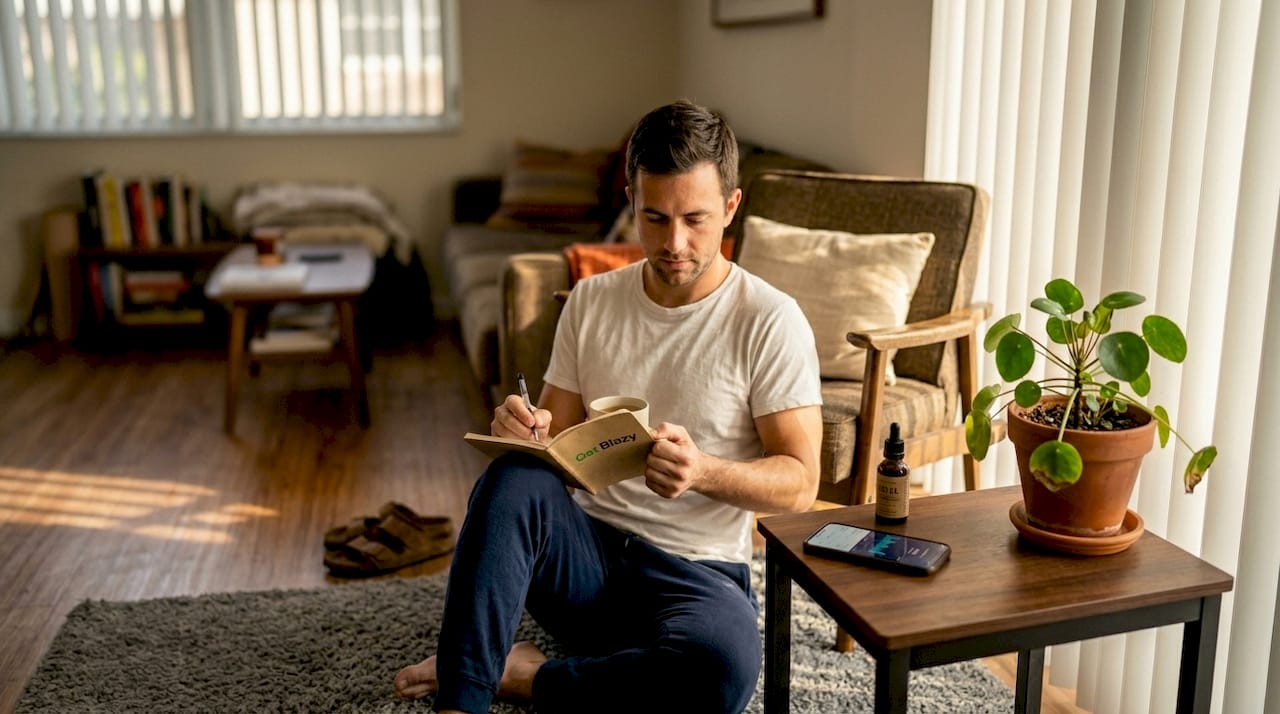
- Journal before you start. Write down your baseline: sleep quality (rate 1 to 10), pain or tension level, anxiety level, and energy. Do this for 3 days before your first dose.
- Log daily for the first two weeks. Note your dose, timing, what you ate, and how you felt 1 hour and 4 hours after taking it.
- Evaluate after 7 to 10 days at the same dose. If you notice no change at all, increase by 5mg. If you notice mild improvement, stay at that dose for another week before deciding.
- Watch for side effects, not just benefits. If you feel unusually tired, have GI issues, or notice mood changes, note them and consider reducing your dose.
- Give it at least 3 to 4 weeks before concluding it doesn’t work. The Arthritis Foundation recommends maintaining a stable dose and monitoring response over time, since benefits are often modest and gradual.
Stop using CBD and consult a healthcare provider if you experience new or unusual symptoms, significant GI distress, or no benefit after 4 to 6 weeks of consistent use at an appropriate dose. Patience and observation are your most powerful tools here.
Where to buy trustworthy CBD oil in Miami
You’ve done the research. Now the most important step is buying from a source you can actually trust. In Miami, that means a licensed retailer with verified products, accessible COAs, and knowledgeable staff who can answer your questions without pushing you toward the most expensive option.
At Get Blazy CBD Dispensary, every product on the shelf is lab-tested, hemp-derived, and compliant with Florida law. Located on Biscayne Blvd, we carry a curated selection of CBD tinctures, gummies, topicals, and vape products from reputable manufacturers. You can browse COAs before you buy, ask our team for guidance on dosing, and choose from options that fit your lifestyle and budget. Prefer to shop from home? We offer fast, discreet delivery across Miami so your wellness routine never has to wait.
Frequently asked questions
Is CBD oil legal to buy and use in Miami for adults?
Yes, CBD oil is legal for Miami adults when it’s hemp-derived, contains less than 0.3% THC, and is purchased from a licensed retailer with proper labeling.
What’s the safest starting dose for CBD oil?
Start with 5 to 10mg twice daily, increase gradually only after several days at the same dose, and always follow the Arthritis Foundation’s guidance to titrate slowly.
Can CBD oil help with anxiety and sleep?
Some studies show small to moderate improvements, but evidence remains mixed and more research is needed before strong conclusions can be drawn.
Are there side effects or drug interactions with CBD oil?
Yes, common side effects include dry mouth and fatigue, and CBD interacts with many drugs processed by CYP3A4 and CYP2C19 enzymes, so always consult your doctor first.
Who should avoid using CBD oil?
Avoid CBD oil if you’re pregnant, have liver disease, or take multiple prescription medications without first getting medical clearance from your healthcare provider.