TL;DR:
- Hemp is a plant with low THC, while CBD is a non-psychoactive compound derived from it.
- Always verify products with third-party lab reports to ensure accurate CBD and THC levels.
- Buy from reputable local shops with transparent testing standards to ensure product quality and legality.
Walk into any Miami wellness shop and you’ll spot “hemp” and “CBD” used almost interchangeably on labels, social media, and packaging. But they are not the same thing, and treating them as such can lead to buying the wrong product, missing out on actual benefits, or running into legal gray areas. Hemp is a plant. CBD is a compound that comes from that plant. That distinction shapes everything from what you feel to what’s actually legal under current regulations. Understanding both terms puts you in control of every purchase you make.
Table of Contents
- What is hemp? Plant basics and legal definition
- What is CBD? How it’s derived from hemp
- Key differences: Hemp vs CBD at a glance
- Buying in Miami: What to look for and what to avoid
- Why most buyers get confused—and how to shop smarter
- Get quality hemp and CBD delivered in Miami
- Frequently asked questions
Key Takeaways
| Point | Details |
|---|---|
| Hemp is the plant | Hemp refers to the Cannabis sativa L. plant with legal THC limits, not a single wellness ingredient. |
| CBD is a compound | CBD is extracted from hemp flowers and leaves for wellness products and is non-intoxicating. |
| Labels and testing matter | Check every product for THC content and third-party testing before buying in Miami. |
| Legal rules are changing | Regulation updates in 2026 mean synthetic cannabinoids and mislabeled products face tighter restrictions. |
What is hemp? Plant basics and legal definition
Hemp is a variety of the Cannabis sativa L. plant that has been cultivated for thousands of years. It’s grown for its fibers, seeds, and naturally occurring compounds, and it looks a lot like its cousin marijuana at first glance. The critical difference is chemistry. Legally, hemp is defined as Cannabis sativa L. with a delta-9 THC concentration of no more than 0.3 percent on a dry weight basis. That threshold is what keeps hemp products on the wellness shelf rather than behind a dispensary counter.
Starting in November 2026, the definition gets stricter. Post-2026 hemp rules narrow the total THC ceiling to 0.3 percent and exclude synthetic cannabinoids as well as finished products containing more than 0.4 mg of THC per container. That change matters for Miami buyers because some products currently sold as “hemp-derived” may not qualify under the updated standard. Always check that the product you’re buying meets the post-2026 definition if you’re purchasing after that date.
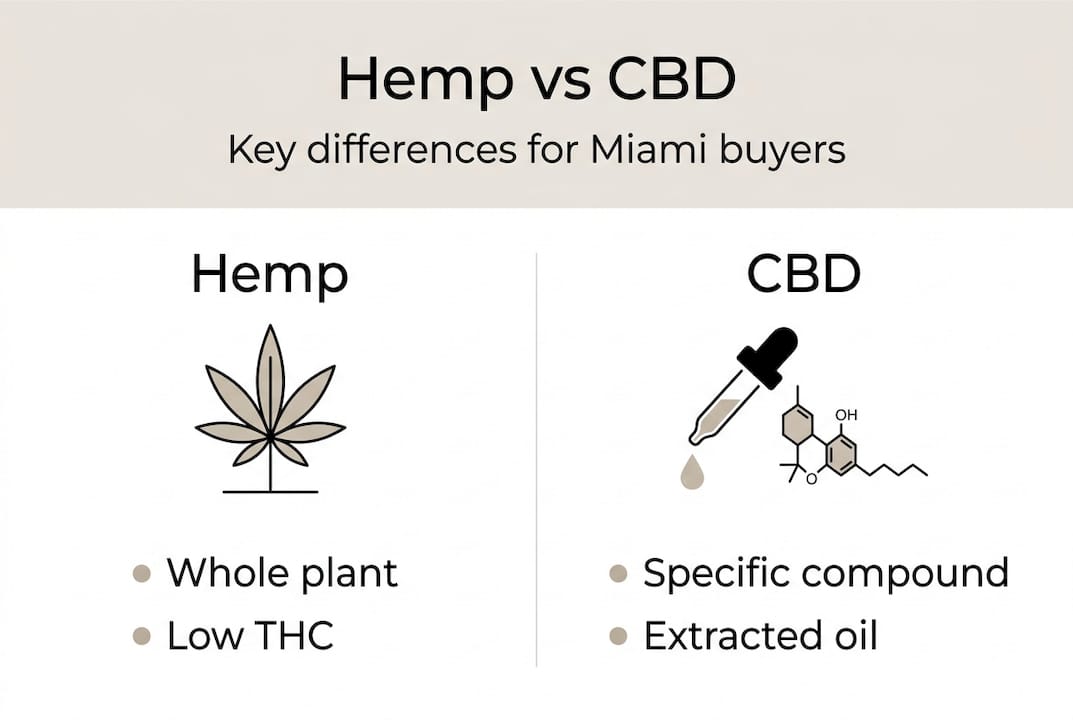
Hemp isn’t just a CBD delivery system. It’s a genuinely versatile crop used across industries.
| Hemp use category | Examples |
|---|---|
| Nutrition | Hemp seeds, hemp protein powder, hemp oil |
| Fiber and textiles | Rope, clothing, building materials |
| Wellness compounds | CBD, CBG, and other cannabinoids |
| Industrial applications | Bioplastics, paper, insulation |
The stalks and seeds are often used for non-CBD purposes. The flowers and leaves are where most of the cannabinoid action happens. Knowing this helps you understand why “hemp seed oil” and “CBD oil” are very different products, even though both come from the same plant.
Pro Tip: If a product says “made with hemp” but doesn’t mention CBD content specifically, it may be using hemp seeds or fiber, not hemp flower. Look for a cannabinoid breakdown on the label before assuming you’re getting CBD.
What is CBD? How it’s derived from hemp
CBD, short for cannabidiol, is one of over 100 cannabinoids found in the cannabis plant. It’s the compound that wellness brands have built entire product lines around, and for good reason. CBD is non-psychoactive, meaning it does not produce the intoxicating effect associated with THC. That makes it appealing for people who want the potential benefits of cannabis without any alteration in mental clarity.
Where in the hemp plant does CBD actually live? The concentration varies dramatically depending on the plant part.
- Hemp flowers and leaves: High in cannabinoids. CBD content runs roughly 3 to 4 mg per gram, with CBDA (the raw acid form) reaching 33 to 37 mg per gram and total THC around 4 to 5 mg per gram.
- Hemp seeds: Nearly zero cannabinoid content. Seeds contain approximately 0.0004 mg of CBD per gram, which is effectively nothing from a wellness standpoint.
- Stalks and stems: Minor cannabinoid presence, used mostly for fiber production.
Extraction is the process that pulls CBD out of hemp flowers and leaves and concentrates it into usable form. The most common methods include CO2 extraction and ethanol extraction, both of which preserve the compound’s integrity without introducing harmful residues. Once extracted, CBD is formulated into the products you see on Miami shelves.
“Not all hemp products contain meaningful CBD. The part of the plant used in production determines whether a product delivers cannabinoids at all.”
CBD ends up in a wide range of product formats. Tinctures and oils place CBD under the tongue for faster absorption. Gummies and edibles pass through digestion, which slows onset but extends duration. Topical CBD in consumer hemp products like creams and balms are applied directly to skin and don’t enter the bloodstream in any significant way. Each format serves different wellness goals, and knowing how CBD is sourced helps you evaluate whether a product is likely to deliver what it promises.
Key differences: Hemp vs CBD at a glance
Let’s put this side by side so there’s no ambiguity.
| Feature | Hemp (the plant) | CBD (the compound) |
|---|---|---|
| What it is | A cannabis variety | A specific cannabinoid |
| Source | Grown as a crop | Extracted from hemp flowers/leaves |
| Primary uses | Food, fiber, cannabinoid source | Wellness products, supplements |
| THC content | Under 0.3% delta-9 by law | Usually negligible in isolate form |
| Form on shelves | Seeds, oil, protein, textiles | Tinctures, gummies, topicals, vape |
| Intoxicating? | No | No |
Hemp refers to the whole plant or a low-THC cannabis variety, while CBD is one specific compound concentrated through extraction. A product labeled “hemp” might not have enough CBD to do anything. A product labeled “CBD” has been specifically formulated to contain that compound at meaningful levels.
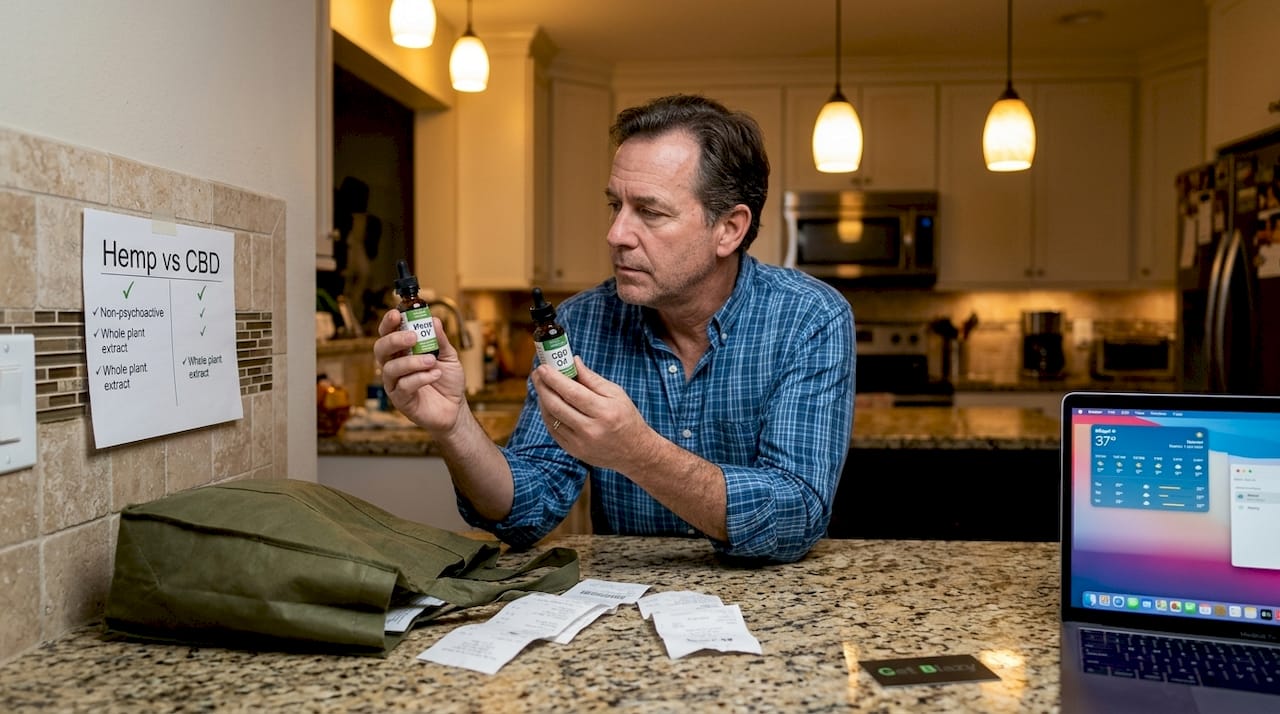
Here’s a number that should change how you shop: 21% of CBD products tested contained detectable THC, and many did not match their labeled CBD amounts. That’s not a small margin of error. That’s a systemic quality problem in the market.
This is why the label alone isn’t enough. You need to look beyond the front of the package.
Pro Tip: Use the compound profiles on a product’s certificate of analysis to verify both CBD potency and THC levels before you buy. If a brand doesn’t provide that document, that’s your answer right there.
Buying in Miami: What to look for and what to avoid
Miami has no shortage of shops selling hemp and CBD products. The volume of options is impressive. The quality? That varies considerably. Here’s how to shop with your eyes open.
-
Request the certificate of analysis (COA). This is a third-party lab report that confirms what’s actually in the product. It should show CBD potency, THC levels, and contaminant screening. Hemp is legal federally if delta-9 THC stays at or below 0.3%, so this document is your legal safety net as well as your quality guarantee.
-
Ignore wellness claims that seem too specific. The FDA has not approved CBD for treating anxiety, sleep disorders, pain, or most other conditions that brands love to advertise. FDA-unapproved CBD claims are technically illegal, and products making them haven’t been held to clinical standards. A brand making bold health promises without solid lab testing should raise immediate skepticism.
-
Avoid synthetic cannabinoids. Post-2026 regulations explicitly exclude synthetic cannabinoids from the hemp definition. Products containing delta-8 or other synthesized compounds derived through chemical conversion may not be legal under the new rules.
-
Check the labeled amounts against the COA. Given how common mislabeling is in this market, comparing the label to the lab report is non-negotiable. If a product says 25 mg CBD per serving, the COA should confirm that number within a reasonable margin.
-
Buy from Miami-local dispensaries that specialize in hemp-derived wellness. Local shops that stake their reputation on compliance and customer service have more incentive to carry only verified, properly tested products.
Pro Tip: Bring your smartphone to the store and scan the QR code on the package if one is available. Many reputable brands link directly to their COA this way, letting you verify quality before you pay.
Why most buyers get confused—and how to shop smarter
Here’s what most hemp vs CBD guides won’t say: the confusion isn’t entirely your fault. The wellness industry has actively blurred these terms because “hemp” sounds natural and approachable, while “CBD” sounds medicinal and specific. Brands use both strategically depending on their marketing goals, and the result is a marketplace where the vocabulary rarely lines up with what’s actually inside the bottle.
What makes this worse is that most articles focus on the dictionary definitions and stop there. They don’t tell you that CBD lacks strong clinical benchmarks for most wellness applications, or that even reputable-looking products show wide variation in actual cannabinoid content. Industrial hemp and wellness-grade hemp flower are used in entirely different applications, and a product bridging both categories deserves extra scrutiny.
Our practical framework: Verify the COA, buy from tested local sources, and treat wellness claims as marketing until the science catches up. That’s not cynicism. That’s how smart Miami consumers protect themselves in a market that’s still maturing.
Get quality hemp and CBD delivered in Miami
Now that you know exactly what separates hemp from CBD, the next step is finding products that actually meet those standards.
At Get Blazy CBD Dispensary on Biscayne Blvd, every product we carry is sourced from reputable manufacturers and tested for potency and compliance. We don’t stock products without lab documentation, because we know that’s what protects you. Whether you’re looking for tinctures, gummies, vape cartridges, or topicals, you can order from Miami CBD and hemp delivery and have your purchase arrive fast and discreetly. No guesswork. No label confusion. Just verified wellness products delivered to your door across Miami.
Frequently asked questions
Is CBD the same as hemp oil or hemp extract?
No, CBD is a specific compound found in hemp flowers and leaves, while hemp oil is pressed from seeds and contains virtually no CBD. Hemp seed products typically carry trace amounts well below any therapeutic threshold.
Can hemp or CBD products make you feel high?
No. Both hemp and legal CBD products contain delta-9 THC below 0.3%, which is far too low to produce intoxication. You should not experience any psychoactive effects from properly regulated hemp or CBD products.
Are all CBD products legal in Miami?
CBD from hemp is federally legal when delta-9 THC stays at or below 0.3%, but you should always verify compliance with a certificate of analysis and check that the product meets current labeling standards.
How can I tell if a CBD product is high quality?
Always choose third-party tested products and review the certificate of analysis for confirmed CBD potency, THC levels, and absence of harmful contaminants. Brands that openly share these documents are operating with transparency you can trust.